
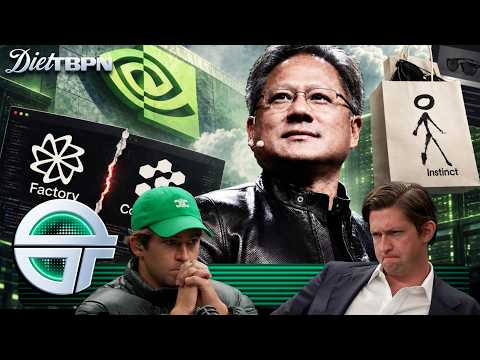
Nvidia’s Cloud Strategy Evolves, Factory-Cognition Drama, Instinct Pushes Into Shopping | Diet TBPN
Nvidia's plan to aggregate neocloud demand through DGX Cloud Lepton settled into a friendlier platform play, while the hosts also dissect the Factory-Cognition feud and Instinct's pushy shopping recommendations.
Watch on YouTube ↗Charlie's summary
- ▶ 0:00
Nvidia's plan to be the front door to compute softened into a unified platform that leaves neoclouds mostly safe
After buying Lepton in April 2025 (rumored at $300 to $900 million), Nvidia was seen as a threat that could steer workloads to neoclouds that cooperated. Instead, the product became a unified AI platform: proprietary software for GPU node groups, dev pods, batch jobs, inference endpoints, storage and observability. Customers can still use their own hardware and keep their relationship with the GPU owner. The host sees it as protecting the CUDA moat, not capturing demand.
- ▶ 4:35
Nvidia's cloud product was not better than going direct, and working with 50 to 100 smart partners proved more strategic
The host says SemiAnalysis, when it tested the product, found that going direct to CoreWeave or Nebius, both in the platinum tier, gave a better experience. That weak showing helps explain why Nvidia turned friendly toward CoreWeave. Working with 50 to 100 very smart teams that each have incentives to grow their buying of Nvidia was seen as the better path. CoreWeave's Forge launch only bothers direct competitors; CPU and storage sellers gain a new customer.
- ▶ 6:37
The Factory-Cognition fight is an ad hominem blowup that should have been a private text, and poaching an adviser is mild next to AI research poaching
The hosts think Venode's attack on Factory's founder skipped the facts and went public within about two and a half hours, when an investor would normally text a portfolio founder privately. They compare it to Eric Schmidt on Apple's board during Android and Mike Krieger's Figma exit. They argue an adviser being poached is minor next to researchers carrying novel IP between labs within a day. Miles's view: such moves should be boring.
- ▶ 18:58
Affiliate-style take rates require creating net new demand, which is the real test for Instinct's shopping push
The host argues brands won't pay big referral fees on demand they already paid to create elsewhere, so an agent only earns a meaningful take rate by suggesting products people hadn't thought of. Instinct's test did that, though many screenshots were power banks. The host suspects it may not be monetizing yet and may mainly want a proof point for the next raise, such as conversion at seven times Instagram reel ads.
Give your email to unlock the rest of the key points — for every episode.
Do more with Charlie
Free — sign in with your email, no password.