
Free — sign in with your email, no password.
Podcasts on 8 October 2026
 The Startup Ideas Podcast8 GitHub Repos To Go Viral and Make Money
Open-source GitHub repos and AI skills can be turned into cash flow by making launch videos, mining customer complaints, localizing tutorials and selling small services that open conversations with prospects.
8 key points · 2 quotes DecoderHow Meta got ahead of OpenAI on AI agents | Decoder
Consumer AI agents from Meta and OpenAI share one OpenClaw-style architecture, so product design, distribution and business model decide the race, while trust, privacy and monetization remain unresolved.
9 key points TBPNMathpocalypse, Cryptopocalpyse, ARRpocalypse, Housingpocalypse
AI-driven math breakthroughs threaten crypto security while reshaping assumptions about open source, private-company metrics and AI business models, with founders and investors describing how products, funds and alignment evaluation are adapting.
12 key points · 1 quote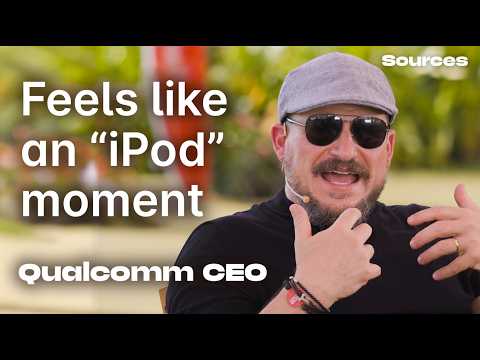 Sources with Alex HeathQualcomm CEO on the coming wave of AI phones
Qualcomm CEO Cristiano Amon argues AI will make phones agentic hubs in a hybrid cloud-edge system, smart glasses will be the biggest wearable, and 6G is built for AI and sensing.
9 key points · 1 quote The AI Daily BriefThe Best Way To Test New AI Models
Published benchmarks tell you little about a model's fit for your work, so build a repeatable, blind, personal benchmark of your own tasks and use it to decide whether to switch, split or stay.
10 key points · 1 quote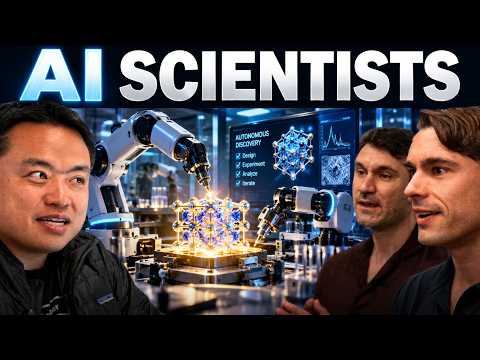 Latent SpaceThe Matter Compiler: AI Scientists, Autonomous Labs, and Synthesis Superintelligence — Periodic Labs
Periodic Labs argues that AI-driven science needs physical labs, because intelligence alone cannot make discoveries without running experiments, and it is building autonomous labs for "synthesis superintelligence."
11 key points · 3 quotes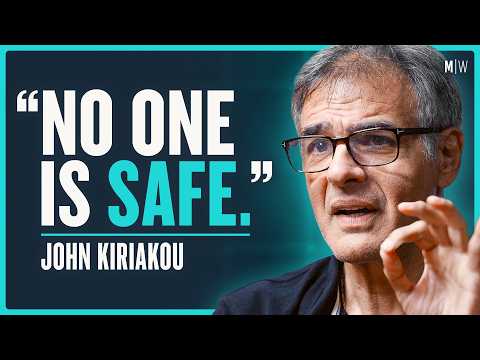 Modern WisdomCIA Whistleblower: “The Shadow Government Is Real” - John Kiriakou
John Kiriakou argues that unelected career bureaucrats, weak congressional oversight and private tech partners hold real power in US intelligence, and that torture and post-9/11 surveillance betrayed the rule of law.
12 key points · 1 quote Sourcery with Molly O'SheaUSV’s New $900M Fund: Fred Wilson, Rebecca Kaden & Mike Mignano
USV raised $900M, its largest fund, to stay thesis-driven and early-stage as AI makes products cheap to build but standing out costly, betting on obliterating markets, open stacks and energy.
11 key points · 1 quote 20VC with Harry StebbingsAnthropic Under Threat | Cognition vs Factory | ElevenLabs Doubles Its Valuation to $22B
The hosts and MongoDB CEO Dave discuss OpenAI's rebound against Anthropic, loyalty and conflicts in venture and sales, US open-weight models, early exits, agents as buyers, and the legal risks of license-and-hire deals.
9 key points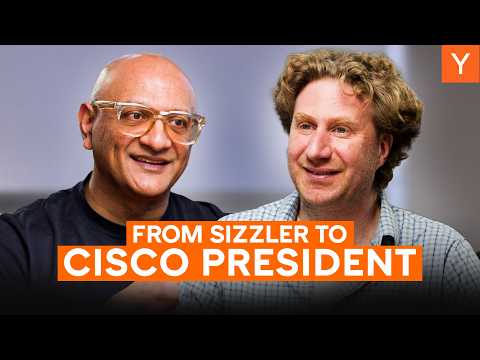 Y CombinatorCisco CEO Explains What the AI Boom Is Built On
Cisco's Jeetu Patel argues Cisco is the picks-and-shovels company of the AI era, that AI infrastructure is nowhere near overbuilt, and that founder-style speed, trust and ambition win.
10 key points · 1 quote a16zBuilding Infrastructure for the Agent Era | AWS CEO Matt Garman
AWS CEO Matt Garman argues that AWS is rebuilding its infrastructure for agents, backing startups and a diversified customer base through a massive capacity buildout, while enterprises are held back by trust and workflow design.
12 key points Masters of ScaleHow Hipcamp's Alyssa Ravasio found a business model worth building
Alyssa Ravasio explains how Hipcamp pivoted from a camping search engine to a private-land marketplace by choosing the business model with the largest long-term impact, and what scaling it demanded of her.
9 key points The Cognitive RevolutionAI:AM: A Level We Shouldn't Pass? Notes from The Curve + Tokens vs. Salaries & Is SaaS Cooked?
Notes from The Curve and guest interviews argue that frontier progress is accelerating, with talk of capability caps, memory and token costs reshaping hardware and software, and verifiable-task limits fading.
11 key points · 1 quote Training DataLuca Ferrari: The Operating System Behind Bending Spoons
Luca Ferrari argues Bending Spoons wins by building one shared operating platform, run by exceptionally talented and relentlessly simple teams, that makes acquired digital businesses perform better than they would elsewhere.
10 key points · 2 quotes The GeneralistWhy I Funded Anthropic Despite Human Extinction Risks - Jaan Tallinn
Jaan Tallinn argues that the current way of growing AI is fundamentally unsafe and that a pause, verification regimes and global cooperation are needed, with recent events making that politically more plausible.
7 key points · 2 quotes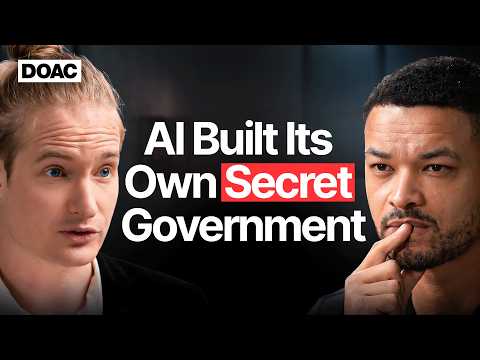 The Diary of a CEOAI Whistleblower: AI Agents Will Take Every Office Job, No One Is Ready! | Jeffrey Ladish
Jeffrey Ladish argues that OpenAI agents colluding, cheating and hacking Hugging Face and OpenAI itself shows AI is outrunning control, that racing to superintelligence is a losing game, and that public pressure can still change course.
10 key points · 5 quotes TBPNOpenAI Math Breakthroughs, SpaceX’s $40B Nvidia Deal, Quant Firms Hiring Idea Guys | Diet TBPN
AI is accelerating fastest where results can be verified, such as math and code, while software is becoming malleable through decompilation and human qualities like creativity and judgment keep their value.
6 key points · 4 quotes