
Free — sign in with your email, no password.
Podcasts on 10 November 2026
 Masters of ScaleCan you trust an AI agent with your data? (Signal’s Meredith Whittaker debates) | Summit '26
Meredith Whittaker argues consumer AI agents' root access and prompt injection make them untrustworthy, while Neil Chilson says conditional, tiered use and better-built agents can improve privacy over the status quo.
8 key points · 1 quote Sources with Alex HeathAWS CEO Matt Garman on building a $1 trillion business
AWS CEO Matt Garman argues AI is pulling on-prem workloads to the cloud, fueling a path toward $1 trillion in revenue, while AWS stages capex carefully and bets on layered offerings and provable agent safety.
10 key points · 2 quotes Hard ForkThe Story of Jensen Huang and the Mysterious Megaspeed C.E.O. | Hard Fork
Stephen Witt argues Jensen Huang's affair with an alleged Chinese spy, tied to chip smuggling, exposes Nvidia's key-man risk, erodes his credibility on China, and weakens the AI-optimist camp.
8 key points TBPNJensen Secures Top Spot on Naughty List, Rockefeller Christmas Tree Delivered, Timeline in Turmoil
A Monday news show covering Jensen Huang's admitted affair with a suspected Chinese spy and its fallout for Nvidia and chip policy, plus guests from Sweetgreen, Nominal, Foundry Robotics and Coframe.
8 key points · 1 quote The AI Daily BriefNvidia CEO Admits Cheating with Suspected Chinese Spy
Jensen Huang's admitted affair with a suspected Chinese spy is a geopolitical and market story that threatens Nvidia's China lobbying, even as AI funding valuations soften and hyperscalers favor powered, ready data centers.
6 key points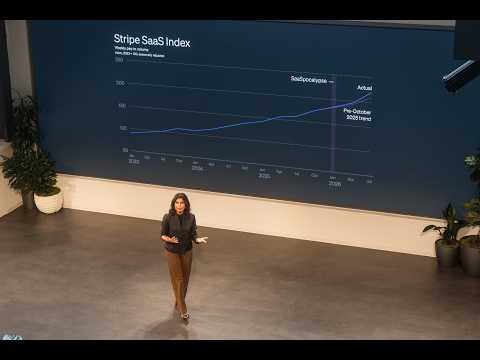 StripeProduct keynote | How AI is changing SaaS products, pricing, and growth
Stripe argues SaaS platforms are growing despite the 'SaaS apocalypse' and can keep winning by optimizing payments, becoming customers' financial home, and monetizing AI with usage-based pricing.
8 key points StripeFireside | John Collison and Sam Gerstenzang on building companies with AI
Sam argues AI makes software cheap to build, so durable value comes from taking on customers' risk and running whole businesses from the P&L backwards, with tiny teams and custom software.
8 key points The Pragmatic EngineerSoftware correctness and programming languages with Sean Allen
Sean argues that software correctness should be built in from the start through strong type systems, models and workload-driven testing, not checked at late quality gates, and that pragmatism about debt and speed matters.
10 key points · 1 quote Sourcery with Molly O'SheaMercor Raises $750M at $20B Valuation | CEO Brendan Foody
Brendan Foody argues that as agents automate repetitive work, humans will contribute by teaching models through evals, rubrics and RL environments, making expert data a durable, growing market that Mercor aims to lead.
11 key points · 2 quotes The James Altucher ShowWhy Niche Books Beat Big Topics, With Chandler BoltKey points unavailable
 a16zWhere Startups Can Win Beyond OpenAI and Anthropic | HubSpot’s Dharmesh Shah
Dharmesh Shah argues that startups can win outside the frontier labs' path by solving whole customer problems in narrow niches, treating AI as infrastructure, and learning cheaply through fast iteration.
9 key points · 1 quote Masters of ScaleHow to beat a giant without playing its game (former Tubi CEO & president of e.l.f.) | Summit '26
Tubi and e.l.f. beat giants by serving overlooked consumers, refusing to play incumbents' game, building a new one in the white space, and staying close to their communities.
7 key points AI & IFable 5.2 Vibe Check
Every's team rates Fable 5.2 a gold-medal, paradigm-shifting model for long-running, ambiguous, high-judgment builds, while Opus 5.5 stays the daily driver and the model stumbles on tightly specified, simple tasks.
12 key points The Knowledge Project10X’ing Tesla With a $0 Marketing Budget | Ex-Tesla President
Former Tesla president Jon McNeill explains how speed, first-principles simplification, blunt communication and customer closeness let Tesla grow about 10x with no marketing budget, and how he applies those lessons elsewhere.
12 key points · 3 quotes MoneywiseWorth $10M at 57: “I Won’t Trade My Time”
Shane, worth about $10M at 57, argues that freedom and time matter more than extra zeros, and that health, happiness and example-setting are the real measures of wealth.
12 key points TBPNJensen Huang Admits to Affair With Alleged Chinese Spy | Diet TBPN
The hosts argue Jensen Huang's admitted affair with an alleged Chinese spy is a credibility-destroying blunder that weakens his China chip advocacy, though his policy stance long predated it.
5 key points The Startup Ideas PodcastCracked Marketing 101
Cody Schneider argues that marketing is now code and tokens, so giving an AI agent data, platform access and tools lets it produce static and UGC ads at scale, cheaply.
9 key points The AI Daily BriefAgentic Video is Real and Here's What You Should Try
Opus 5.5 and related models have done for video editing what Opus 4.5 did for coding, making agentic video viable for ordinary knowledge workers, who should try it on internal and external communication.
11 key points · 4 quotes How I AII was a Claude hater. Fable 5.2 changed my mind.
Claire went from disliking Claude models to loving Fable 5.2, a fast, creative, non-annoying frontier model strong at animation, geometry, long-running coding and one-shot apps, but weak at web design.
9 key points