
Free — sign in with your email, no password.
Podcasts on 22 October 2026
 The Startup Ideas PodcastThe 9 Stages of AI Agent Adoption, Explained
Greg argues that companies blocking AI shopping agents are acting from fear and protecting ad and upsell revenue, and that the fight will play out in nine stages that open startup opportunities.
11 key points · 2 quotes Dialectic with Jackson DahlThe Computer of the Future: Josh Miller on Why He’s Still Betting on the Browser in the AI Age
Josh Miller argues the browser remains the core of the AI-era computer, and that his company's art-driven, intuition-led approach, combined with Atlassian's enterprise reach, gives it a real shot at building it.
11 key points DecoderBill Gates says to prepare for 20 years of tumultuous AI disruption
Bill Gates argues AI is the most powerful and dangerous technology ever invented, that governments must set safeguards now, and that society faces roughly 20 turbulent years before any abundance.
9 key points TetragrammatonRick Rubin and Dr. Paul Conti Discuss Why Modern Therapy Isn't Working
Dr. Paul Conti argues modern mental health care favors fast symptom suppression over understanding, and that people can understand themselves through compassionate curiosity, a unified framework, and a recognized third drive, the generative drive.
12 key points · 2 quotes Modern WisdomWhy Men & Women Are Giving Up On Each Other - Daniel Cox
Daniel Cox argues that young men and women are drifting apart because of weaker formative contact, algorithm-fed stereotypes, privatized social life, and a shift from collective to individual responsibility, and that embodied, community-based engagement is the fix.
12 key points · 2 quotes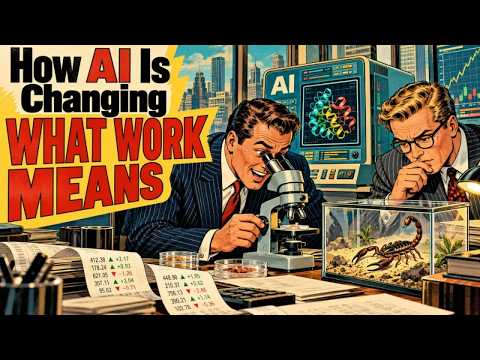 The AI Daily BriefHow AI is Changing What Work Means
A financial research firm used Claude to attempt scorpion antivenom design, showing that AI changes what firms work on, while physical-world bottlenecks and public opinion limit how fast AI labs absorb industries.
7 key points · 1 quote 20VC with Harry StebbingsThe New VC Game | CoreWeave Sell-Off Creates Panic | Revenue Multiples Out of Control
Venture capital has concentrated into a few mega-bets, so great but non-hypergrowth companies struggle to raise, while AI infrastructure, coding tools and inference boom and some revenue multiples look stretched.
12 key points Y CombinatorMagic Patterns CEO Reviews Startup Websites
Alex Danalovich of Magic Patterns explains how his tool and team work, then critiques startup sites, arguing that vibe-coded pages fail by chasing flair over clarity, conversion and the human visitor.
11 key points The James Altucher ShowTom Bilyeu's Trick for Making AI Tell You Why You'll Fail
Tom Bilyeu argues AI erases technical and spending moats, rewards people who prompt it skillfully and push back on it, and will hurt those who refuse to adapt, while the infrastructure boom likely faces a correction.
11 key points · 2 quotes a16zThe Frontier Ideas a16z Wants to Fund Now | Marc Andreessen, Ben Horowitz & Chris Dixon
a16z is widening its crypto fund into a Frontier fund because AI gives founders new superpowers, makes ambition the default, and opens odd new categories where open source matters most.
12 key points · 1 quote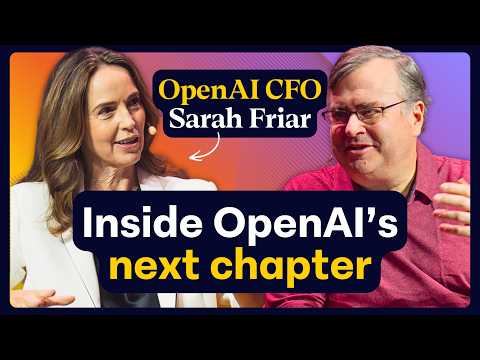 Masters of ScaleOpenAI CFO Sarah Friar & Reid Hoffman on where AI goes from here | Masters of Scale Summit 2026
Sarah Friar argues AI is moving from answering to doing, and that OpenAI must earn trust by pacing the frontier, showing real outcomes in health and security, and asking communities what they need.
8 key points Latent SpaceWhy AI Compute Comes in Rectangles — Erik Bernhardsson, Modal
Erik Bernhardsson argues AI infrastructure needs flexible, aggregated compute rather than rigid multi-year GPU blocks, and explains how Modal's products, capacity strategy and company-building choices follow from that.
11 key points · 2 quotes Latent SpaceThe Recommendation Engine for Commodity Traders — Anekha Sokhal, Moshi
Moshi founder Anekha Sokhal, a former energy derivatives trader, explains building a real-time, recommendation-driven insight engine for traders, and what AI engineers and buyers told her after her talk.
7 key points · 1 quote Dwarkesh PodcastWhat will computer chips look like in 2045?
Intel leaders argue that making advanced chips depends on disciplined schedule-driven process development, stepwise materials and architecture innovation, and a tool supply chain that caps output growth through 2030 despite huge AI demand.
9 key points · 3 quotes The Diary of a CEOPresident Zelenskyy: It's Time To Tell You The Truth About This War! I Found 500 Bodies!
Zelenskyy argues Putin's war is an imperial project to rebuild the Soviet Union, that Ukraine held because its people resisted, and that atrocities like Bucha make forgiveness impossible and make only a ceasefire and justice realistic.
9 key points No PriorsThe New Apex Predator: CrowdStrike CEO George Kurtz on Adversaries Armed With AI Agents
George Kurtz argues that AI agents have flattened the adversary pyramid and made attacks faster, but defenders can win by fighting AI with better AI, built on their own data, digital twins and open-weight models.
11 key points AI & IYour Company Needs an AI Lab
Every's Dan argues companies need a dedicated frontier team that experiments with new AI so everyone else can keep working, while team members show what that looks like in practice.
10 key points · 3 quotes All-In PodcastArvind Krishna & Nikesh Arora: Quantum Threat, Open vs Frontier AI, AI Cyber Warfare & SaaS Collapse
Krishna and Arora argue that quantum will break today's cryptography around 2030 so migration must start now, open-weight models will take most tokens, and AI will drive cyber arms races and SaaS consolidation.
11 key points · 3 quotes