
Free — sign in with your email, no password.
Podcasts on 29 October 2026
 Dwarkesh PodcastHow an unelected man ruled New York for 30 years
Dwarkesh's video essay draws lessons on gaining and holding power from Caro's biographies: Moses entrenched himself through law, leverage and a graft machine, while Johnson mastered the Senate through leverage, agenda control and brokering.
9 key points · 3 quotes The Peel with Turner NovakBuilding a VC Firm from $4M to $4B | Aydin Senkut, Felicis
Aydin Senkut argues that outlier venture returns come from resetting priors after each win, riding giant technology waves as a generalist, backing underestimated founders, and being honest with them using data.
12 key points · 1 quote DecoderInside Anthropic’s trillion-dollar AI gamble
Semianalysis analyst Joey Brookhart argues Anthropic's S1 shows a capital-efficient, high-margin business, but its growth depends on spreading beyond coding and on the AGI training chase not outrunning revenue.
10 key points · 1 quote Modern WisdomWhy You Feel Bad When Nothing Is Wrong - Rob Kurzban
Rob Kurzban argues feelings are evolved measure-and-motivate systems, each tracking something adaptive. Many misfire in the modern world, and understanding their function lets us decide whether to act on them.
12 key points · 4 quotes Training DataCrusoe CEO Chase Lochmiller: Turning Stranded Energy Into Intelligence
Chase Lochmiller explains how Crusoe grew from stranded-energy Bitcoin mining into a vertically integrated AI infrastructure company, and the leadership lessons on trust, competition, people and bad news that scaled it.
10 key points Sourcery with Molly O'SheaFranklin Templeton CEO on SpaceX, Anthropic, Circular Deals & the State of the Market
Franklin Templeton CEO Jenny Johnson argues that AI is a lasting growth driver whose payoff will be slow, that tokenization will replace financial rails, and that scale-driven acquisitions and late-stage venture access fuel growth.
10 key points · 1 quote 20VC with Harry StebbingsInstinct Worth 30BN? | Microsoft Cuts 27,000 Jobs While Meta Taps Equity Markets for $95B CapEx
Anthropic's S1 reads as a top-tier performance that makes other venture bets look slow, while hyperscaler layoffs, equity raises, Chinese model security scares and mega-rounds like Instinct test how long the AI capital cycle runs.
10 key points a16zHow to Build the Next SpaceX or Tesla
Connor and Aaron argue that rebuilding America's industrial base, driven by defense demand and private capital, creates dual-use supply chains, new manufacturing models and very large companies across defense, energy, robotics and minerals.
12 key points Masters of ScaleBrain implants can now read your thoughts. Two experts debate who should control them | Summit 2026
Brain implants are moving from decoding attempted speech toward inner thoughts, which helps patients but threatens mental privacy, so trust, business models, design and cognitive liberty matter.
6 key points · 2 quotes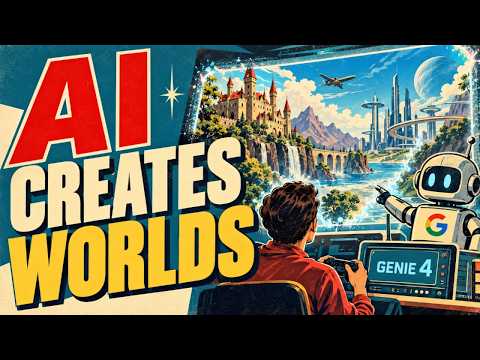 The AI Daily BriefAI Can Now Create Worlds You Can Change in Real Time
Google's Genie 4 pairs a world model with Gemini reasoning and audio to create real-time steerable worlds, pointing to robot training and games, though it is still a short tech demo.
8 key points AI & IHuman in the loop - 4 levels of automation
Kieran live-codes a work autonomy board to sort ten kinds of business work into four levels of AI involvement, concluding that most work moves toward automation while human ideas and human-to-human contact stay.
6 key points Uncapped with Jack AltmanIntroducing Benchmark Breakfast with Jack & Ev
Anthropic's S-1 shows frontier AI labs are profitable, code generation is a historic product-market-fit moment pulling whole categories upward, open and closed models coexist, and cyber risk is urgent while bio and robotics lag on feedback loops.
9 key points The Diary of a CEOWW3 Threat Expert: Russia Is Coming For Europe, Attack On This Country Pulls Us In! | Dr Sarah Paine
Sarah Paine argues that continentalist powers like Russia, China and now Trump's America are dismantling the maritime rules-based order through costly, unlimited wars, and that democracies must rebuild institutions before conflict spreads.
10 key points No PriorsTaking on ServiceNow: Coding Agents for the Rest of Us with Serval Co-Founder and CEO Jake Stauch
Jake Stauch argues that coding agents for IT and enterprise teams can displace ServiceNow, because large enterprises need guardrails, approvals and audit trails more than raw agent power.
11 key points · 1 quote TBPNApple’s ‘Pro and Tell,’ Google’s Two New AI Models, OpenAI Eyes Google’s Custom Chips | Diet TBPN
Apple's touchscreen MacBook Pro event, Google's Genie 4 and Gemini 4 Carbon launches, OpenAI buying Google TPUs, and Instinct's $30B raise all point to a market where every lab uses every chip and growth outruns skepticism.
5 key points AI & ICan You Use AI To Make Good Art? — With Fred Graver
Fred Graver argues that AI helps make good art, not slop, when creators first empty out their own ideas, then use AI as a writers' room across ideation, production and audience reach.
8 key points The Startup Ideas Podcast$100M ARR Founder: Build an Agent Harness
John Noronha argues that the agent harness, the tools and loops around a model, is where product value lies. He says to build it where taste and subjectivity matter, test constantly, and stay niche.
10 key points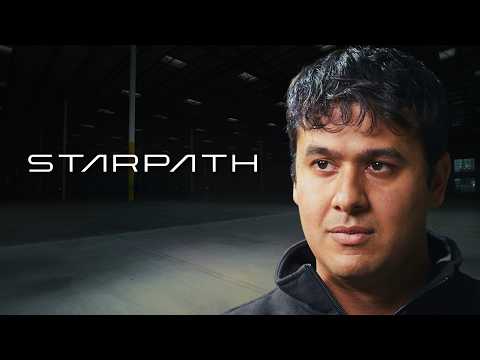 RelentlessSpaceX has no competition — Saurav Shroff, Starpath
Saurav Shroff argues that orbital AI data centers need fully reusable rockets, SpaceX has no real competitor and won't sell launch, so Starpath is building capacity and may build its own launch company.
8 key points TetragrammatonRick Rubin and Jack Kruse: Are We Missing the Most Important Force in Nature?
Jack Kruse argues that Earth's weakening magnetic field, long assumed stable, is the overlooked base cause of ecological and health change, and that individuals can respond through location, light, cold, water and building choices.
12 key points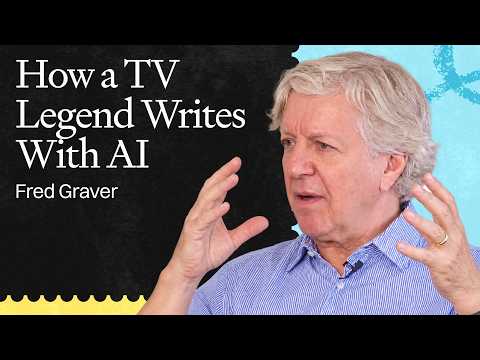 AI & ICan You Use AI To Make Good Art? — With Fred Graver
Fred Graver argues AI can help make good art, not slop, if you first empty out your own ideas, then use AI as a writers' room across ideation, production and marketing.
9 key points · 1 quote The Cognitive RevolutionFreedom of Action: America's ASI Strategy, w/ RAND's Joel Predd, Ben Boudreaux & Matt Chessen
RAND researchers argue the US should not commit to any one superintelligence strategy yet, and should instead build the capabilities that keep every option open until key uncertainties resolve.
12 key points · 3 quotes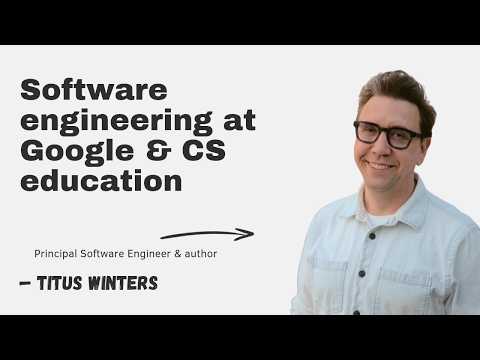 The Pragmatic EngineerSoftware engineering at Google & CS education with Titus Winters
Titus Winters argues that Google's engineering lessons—tests, safe change, deterministic tooling, psychological safety—still hold in the AI era, and that CS education must shift from writing code to specification, testing and teamwork.
8 key points · 2 quotes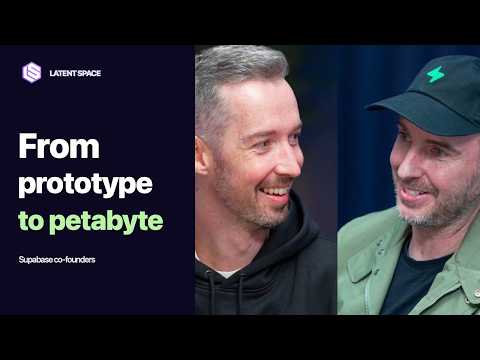 Latent SpaceWhy Agents Love Supabase — with Paul Copplestone and Ant Wilson
Supabase's founders explain how they are extending Postgres from prototype to petabyte for agents and builders, through acquisitions, rigorous reliability work, product-led sales and code-first tooling.
9 key points · 1 quote