
Free — sign in with your email, no password.
Podcasts on 18 November 2026
 Training DataThe Boomerang CEO(s): With MongoDB’s Dev Ittycheria
Dev Ittycheria argues a CEO's job is strategy, the right team, and an environment for success, and that candor, vulnerability, and the courage to make hard people calls drive speed.
12 key points · 4 quotes Dialectic with Jackson DahlStatus, Working Theorys, and Work That Lasts | Anu Atluru
Anu Atluru argues that observation, theory and heavy, durable work matter more than chasing status or scale, using ideas like premises, social utilities, art versus sport, and insider media.
12 key points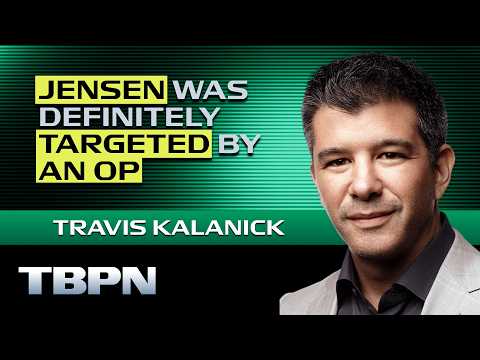 TBPN“If I Were Jensen, Here’s What I’d Do” — Travis Kalanick
Travis Kalanick argues Jensen Huang was the target of a coordinated op, shares principles for fighting one, and says Nvidia needs its founder back rather than a caretaker CEO.
8 key points The AI Daily BriefHow Business AI Use is Changing
NLW argues that three enterprise AI studies tell one story: falling token prices and easy model switching give buyers leverage, so usage is growing far faster than spending, though adoption is very uneven.
8 key points The Pragmatic EngineerSoftware factories and code reviews with Harjot Gill
Harjot argues that AI agents and software factories make human code review obsolete, justify enormous token and compute spend, and reward high-agency, strategy-game-minded engineers, though the host remains skeptical on several points.
12 key points · 1 quote David PerellThe Architecture of Great Writing (V. E. Schwab Interview)
V. E. Schwab argues great fiction is engineered: outline obsessively, start from the ending, invest slowly in character and rules, ground fantasy in reality, and write for yourself with patience.
11 key points · 3 quotes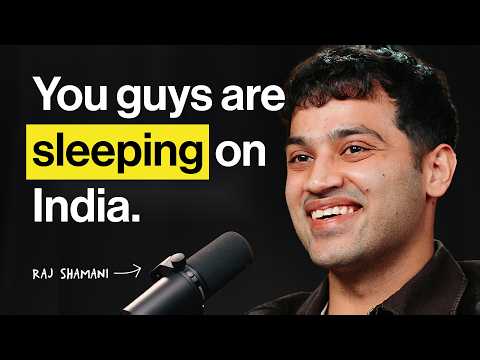 Colin and SamirThe New King of Podcasts
Raj Shamani explains how lessons from selling dish soap in a small Indian city — go narrow, dominate, distribute everywhere, say no — took him to India's biggest podcast, and why India is the next creator market.
12 key points Y CombinatorHow To Build The Future: Eric Glyman, Co-CEO of Ramp
Eric argues Ramp won by aligning its business model with customer savings, and that AI now lets companies be rebuilt as lighter, faster organizations if they change how they work.
12 key points · 1 quote The James Altucher ShowRobert Greene: After a Stroke, He Wrote a Book by Hand for 7 Years #podcast #selfimprovement
Robert Greene argues that language, labels and smartphones shrink our experience, and that the sublime, a bodily sense of vastness, can wake us up and give life meaning without a near-death experience.
12 key points a16zWhat It Takes to Build an AI That Actually Knows You
Ken Liu argues that a single, secure personal context layer built from your computer's own event stream can let any agent know you and act proactively, instead of each agent relearning you.
11 key points · 1 quote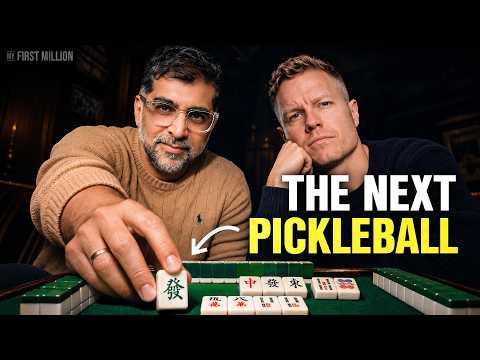 My First MillionThe next pickleball is already making $40M/year
Shaan and Sam argue that mahjong is the next pickleball, riding on high barriers to entry, aesthetics and a desire to get offline, and they connect it to pricing, influence and screen-time trends.
10 key points · 1 quote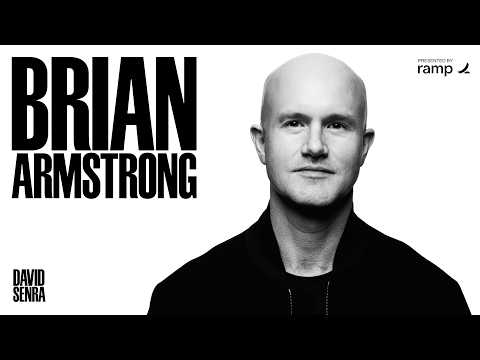 David SenraWhy Now Is The Golden Age of Building | Brian Armstrong, Coinbase
Brian Armstrong argues that this is a golden age of building: AI agents change how he runs Coinbase, agent-to-agent commerce will need crypto rails, and finance is still mostly untouched.
12 key points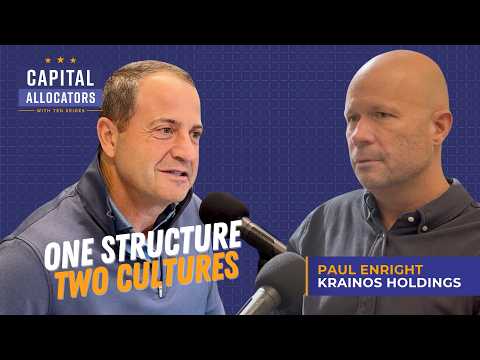 Capital AllocatorsPaul Enright: Single-Manager Hedge Funds, Pod Shops, and Equity Research in the Age of AI
Paul argues single- and multi-manager funds differ by unit of production (idea versus portfolio), that returns have shifted toward multiples, and that analysts should do deep research themselves while automating short-lived tasks with AI.
11 key points · 3 quotes RelentlessWhat drives the world's greatest founders | Josh Wolfe, Lux Capital
Josh argues that great founders are driven by pain and a chip on their shoulder, paired with a moral compass, who kill risk, tell authentic stories, raise capital, and compound a monopoly-like advantage.
12 key points · 1 quote TBPN🔴 David Solomon LIVE on TBPN at TomorrowX
Live from Tomorrow X, guests argue that AI strengthens cyber defense, that open-weight model ensembles and fast inference matter, and that human trust still anchors business, while private AI markets may reset after Jensen Huang's exit.
12 key points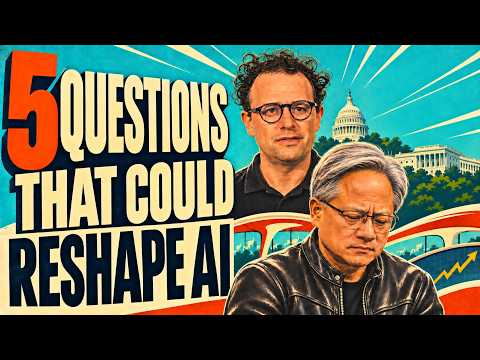 The AI Daily Brief5 Questions Shaping AI This Week
NLW argues five questions will shape AI this week: how Anthropic's IPO lands, whether OpenAI answers with a new model, whether Jensen Huang returns to Nvidia, who takes political fallout, and whether Congress tightens export controls.
7 key points · 1 quote All-In PodcastDatabricks CEO: AGI Is Already Here, Why Companies Are Behind, and the Superintelligence Debate
Ali argues AGI is already here and the real bottleneck is enterprise context, security, cost and lock-in, while runaway superintelligence (RSI) fears are overblown and cyber is the real risk.
10 key points