
Free — sign in with your email, no password.
Podcasts on 6 October 2026
 The AI Daily BriefThe Open Weight AI Renaissance Coming to America
Open-weight AI in the US is becoming three conversations at once, on enterprise strategy, safety and national security, and enterprise demand for control and fine-tuning is the force pulling American labs toward open models.
7 key points · 3 quotes a16z cryptoHow Crypto Is Rebuilding Finance From First Principles
Guy Willette argues crypto is moving from cypherpunk ideology to pragmatic financial infrastructure, with stablecoins and perps as proof, and that success means people stop saying "crypto" and just use blockchains.
10 key points · 2 quotes The Cognitive RevolutionAI’s Memory Wall + Swyx on AI Engineering
Frontier labs say pre-training still scales and a capability cap may be warranted, while AI now closes chip-design loops and is reshaping engineering work, management, software demand and science.
12 key points · 1 quote TBPNLe Chonk, Buffet's Just Like You, TJ Parker Returns, Dylan Field Joins
AI is reshaping games, work, healthcare, design and hardware, but the hosts and guests argue value comes from human judgment, real infrastructure and diversification rather than shortcuts or hype.
10 key points TBPNAI’s Economic Impact, Warren Buffett Discovers YouTube, Mistral Launches “Le Chonk” | Diet TBPN
AI is turning game decompilation into training data and a legal fight, while Acemoglu's speech-recognition history argues AI diffusion may be slow, and Mistral's open-weight model gains ground on Chinese labs.
5 key points · 1 quote TBPNAI Video Game Mods, Chinese Cars Take Over UK, Apple Tightens Mac Data Controls | Diet TBPN
AI-built video game mods are impressive viral demos but too broken to play through, while Chinese cars win over Britain and Apple weighs tighter Mac permissions as AI agents gain access.
9 key points Lex Fridman PodcastPsychiatry, Insane Asylums, Mental Illness, ECT, Lobotomies, Freud & Jung | Lex Fridman Podcast #502
Historian Andrew Scull argues psychiatry's history is a cycle of overblown cures and false confidence, leaving it with symptomatic treatments, a shaky diagnostic system, and limited progress that demands humility and broader approaches.
9 key points · 2 quotes Conversations with TylerLuis Garicano on Spain, Europe, and the Future of Work
Garicano argues that Spain and Europe are held back by political economy, ageing electorates and rigid institutions, and that AI will make jobs messier rather than cause mass unemployment.
10 key points · 3 quotes The Startup Ideas Podcast13 Businesses for the Age of AI
In an agent-driven world, the host argues only 13 kinds of businesses are worth owning, from AI-native service firms and distribution to harnesses, physical assets, compute and security.
10 key points · 1 quote AI & IHow Sam Altman Actually Uses Dots to Run OpenAI and His Life
Sam Altman argues AI will expand human demand and creativity rather than replace people, a renaissance rather than an industrial revolution, and describes how Dots, live documents and ultrafast models are changing his own work.
8 key points · 1 quote Training DataGoogle's Head of AI Infra, Amin Vahdat, on the Architecture of Intelligence
Amin Vahdat argues that AI infrastructure is won by co-designing chips, models, networks, buildings and power around delivered workload performance, where specialization pays only if the workload is durable and large.
11 key points · 3 quotes BG2PodThe SpaceX IPO, Fable 5, AI Capex Update & Market Check w/ Gavin Baker, Andrew Fox & Clark Tang
Gavin Baker and the Altimeter team argue SpaceX's IPO rests on a few checkable levers: reusable launch, fast and highly monetized AI compute, and a possible model upside from Cursor, all backed by AI demand outrunning supply.
11 key points · 4 quotes The Logan Bartlett ShowBret Taylor: A New Class of Software Winners
Bret Taylor argues AI agents that do work rather than boost productivity will reshape software markets, pricing and incumbents, with execution, business-model change and adopting the tools deciding winners.
11 key points · 1 quote In DepthThe most expensive mistake in outsourcing your tech stack | Jay Parikh (EVP CoreAI, Microsoft)
Jay Parikh argues that great engineering leadership treats people, strategy and technology as one system, built around speed of learning, small empowered teams, parallel big bets, and owning critical layers of the stack.
10 key points · 7 quotes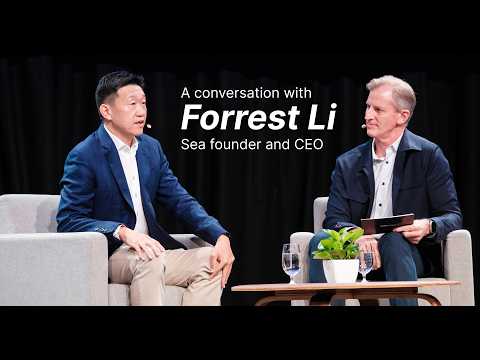 StripeSea founder and CEO Forrest Li in conversation with Tyler Bryson
Forrest Li argues that Sea won by solving specific local problems from the bottom up, staying humble and startup-minded, applying AI where it measurably helps, and never giving up.
9 key points · 1 quote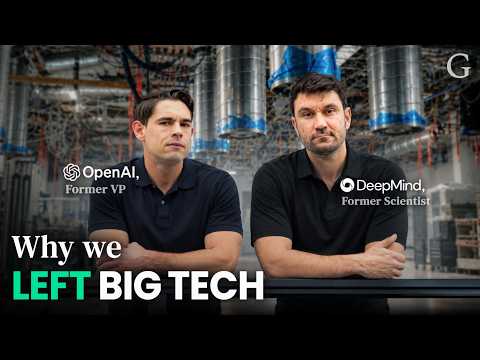 The GeneralistMeet the Ex-OpenAI & DeepMind Leads Creating an AI Scientist
Periodic Labs' founders argue that AI must run real experiments in the physical world, with labs, simulation and LLMs in a closed loop, to make new discoveries like high-temperature superconductors, because reading text alone cannot.
10 key points Capital AllocatorsNancy Zimmerman: People, Process, and Fixed Income Arbitrage at Bracebridge Capital
Nancy Zimmerman argues that fixed income arbitrage inefficiencies persist because of constrained investors and structure, and that curious, rigorous people plus disciplined process, sized to the opportunity set, deliver uncorrelated returns.
10 key points · 4 quotes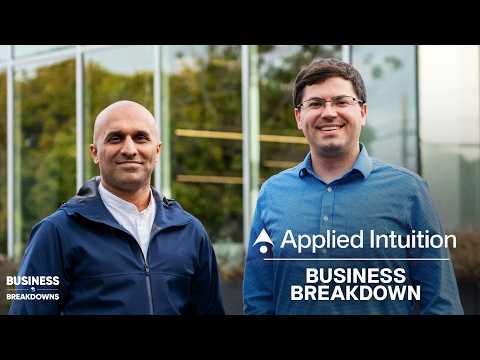 Business BreakdownsThe Nvidia of Physical AI: Inside Applied Intuition's $15B Business
Applied Intuition's founders argue physical AI is a far larger market than digital AI, and that a horizontal tools-plus-intelligence platform, now extended by the Dana agent platform, is the way to serve it.
10 key points · 1 quote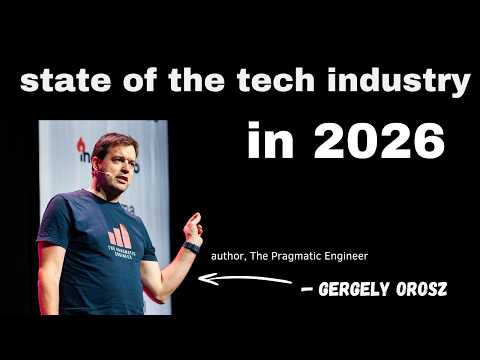 The Pragmatic EngineerThe state of the tech industry in 2026 - LDX3 New York
Gergely Orosz argues that AI agents have transformed software engineering in the last 12 months, while teams, planning and testing endure, review and reliability break, and engineering leaders must stay hands-on.
12 key points · 1 quote a16zThe Biggest Shift in Cybersecurity in 30 Years
Kevin Mandia argues AI is the biggest shift in security in 30 years: defenders need AI offense to train AI defense, humans must leave the detect-and-respond loop, and startups must scale fast.
10 key points · 1 quote MoneywiseI'm Worth $50M and Spend $110K a Month on a Zoo That Makes $0
Dan Fleshman argues you should give all your time to one company and spread your money across many investments, a rule he learned after losing a $65 million business in a day.
11 key points · 1 quote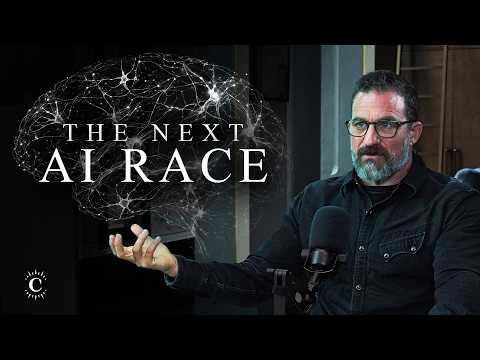 Invest Like the BestHow Founders Can Build the Energy to Do More | Andrew Huberman
Huberman argues that high performers should assess their own energy and sleep honestly, learn to switch off at night, and expect AI companies to move toward non-invasive reading and writing of the brain.
8 key points · 3 quotes