
Free — sign in with your email, no password.
Podcasts on 12 November 2026
 Modern WisdomWhy Atheists Keep Finding God (in everything) - Alex O’Connor (4K)
Alex argues that consciousness is the one thing science cannot define or explain, that this undermines materialism more than atheism, and that religion is better understood as experience than as argument.
9 key points · 1 quote The Peel with Turner NovakThe COO Playbook | Emilie Choi, Coinbase
Emilie Choi argues that early process, single accountable owners, clear writing, direct communication and bold public moves help Coinbase move faster and survive its crises, while AI raises the premium on judgment.
12 key points DecoderJensen Huang is out — and this could all backfire for China | Decoder
Kyle argues the Nvidia scandal is murky and may backfire on Beijing, while China's real AI strategy is diffusion and domestic chips rather than racing the US to AGI.
9 key points The AI Daily BriefWall Street Has No Idea What Anthropic is Worth
With Anthropic's IPO days away, valuation chatter shows investors have no clear anchor for pricing it, while compute commitments and a new productivity suite aimed at Microsoft add to the uncertainty.
7 key points Uncapped with Jack AltmanBenchmark Breakfast 11/12/26: Anthropic’s IPO, NVIDIA in Crisis, the Midterms, and $60B in VC
Jack and Ev argue that AI-lab and AI-infrastructure markets are driven by narrative and reflexivity, from Anthropic's IPO and the capex gap to US AI sentiment and a $60B venture fundraising wave.
11 key points 20VC with Harry StebbingsSequoia Leaves London, Close Scout Program & End Evergreen Fund | NASDAQ Loses $2.5T in 24 hours
Sequoia's simplification, an Nvidia investigation, Anthropic's IPO, falling seat-based SaaS and AI-native speed, plus security and tax debates, show markets rewarding focus, demand-driven AI growth and agent exposure.
12 key points · 2 quotes a16zHow AI Could Bring Halo and Other Classic Games Back to Life
AI that can operate game tools and write code is collapsing the time from idea to playable game, which could widen who makes games, revive old and niche genres, and enable adaptive, never-ending games.
12 key points Masters of ScaleThe world’s biggest retailer wants to move like a start-up (Walmart CEO John Furner) | Summit '26
Walmart CEO John Furner argues that a giant company can change fast by acting from strength, aligning leadership, and using AI to empower its people and customers while keeping human connection.
8 key points The Diary of a CEOThe Brain Doctor That Figured Out The Cause Of Dementia - Dr. David Perlmutter
Neurologist David Perlmutter argues Alzheimer's is largely a preventable metabolic and immune condition of the brain, driven by lifestyle choices that flip microglia from protective to destructive, not by amyloid or genes alone.
12 key points No PriorsPowering AI-Driven Drug Discovery with President of Isomorphic Labs Max Jaderberg
Max Jaderberg argues drug discovery stalls because it is empirical trial and error, and that predictive AI models reaching experimental accuracy can move design onto computers, raising success rates and enabling safer, more complex medicines.
10 key points · 1 quote The Builders with Walter IsaacsonAlex Karp on Why AI Will Hurt the Middle Class: You Can’t Have Billionaires Becoming 100x Wealthier
Karp argues that outsider thinking built Palantir, that AI will widen wealth gaps and strain the middle class, and that the answer is a deal pairing higher taxes with waste cuts, not a wealth tax.
7 key points TBPNJensen’s Scandal Tests Nvidia’s Board, AI Trade Roars Back, The Great Hobby Debate | Diet TBPN
The hosts cover the Jensen Huang scandal's fallout for Nvidia, the AI trade's rebound on CoreWeave and Anthropic IPO news, Jeff Yass's no-bubbles argument, and a debate over what counts as a hobby.
8 key points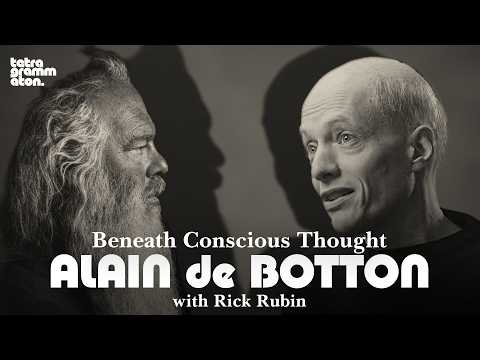 TetragrammatonRick Rubin and Alain de Botton on the Hidden Intelligence of the Mind
Alain de Botton argues that much of our best thinking, creativity and emotional life runs beneath conscious awareness, and that envy, therapy, silence, art and religion are ways of listening to it.
12 key points The Startup Ideas PodcastNew ChatGPT, Claude Whiteboards, Google Carbon: LIVE reaction
A live reaction to a huge week of AI launches, arguing that each new release opens startup opportunities in productized services, local-business AI, skills and marketing engineering, so builders should stay in abundance mode.
11 key points The Startup Ideas PodcastUse Grok Bot Better Than 99% of People (Full Course)
Ras Mic shows how he runs engineering, design, content, finance and shopping through Grok Bot, using separate context-rich bots and handing code to Claude Code, so one agent becomes his interface to work and the internet.
10 key points Y CombinatorInside Theranos with ex-Employee Tyler Shultz
Tyler Shultz argues that Theronos ran on charisma, borrowed credibility, secrecy and fear, and that founders, employees and investors can resist such fraud with processes, early use of ethical channels and good legal help.
12 key points The Tim Ferriss ShowQ&A with Tim — How to Get Unstuck, Resilience in Hard Times, Tools for Brain Health, and More
Tim answers live Q&A questions on Alzheimer's prevention, getting unstuck, staying hopeful, making quantified-self data actionable, psychedelics, and why he distrusts all-natural supplements, with practical tools throughout.
11 key points