
Free — sign in with your email, no password.
Podcasts on 14 October 2026
 David SenraLessons from History’s Greatest Leaders & Conquerors | Ben Wilson
Ben Wilson and David Senra draw common traits from history's great leaders: zeal, willingness to trade off, vision, focus, obsession and belief. Ben also describes facing stage four cancer with gratitude.
10 key points · 1 quote The Cognitive RevolutionAI Minds & 8mm Memories: Measuring Experience, Preserving History
AI progress is outrunning adoption: agents are rewriting core infrastructure like Git, hidden internal states in models may matter for safety and welfare, and verified human archives gain value.
12 key points · 4 quotes AI & IVIBE CHECK: GEMINI 4—GOOGLE IS BACK
Every's team finds Gemini 4 Argon a surprisingly strong frontier model, especially for editorial writing and ideas-heavy builds, held back by the Anti-gravity harness, weak self-verification and over-dense output.
8 key points AI & IHow Hugging Face’s Investor Spots Winners
Matt Hartman argues that the best early-stage bets come from technical founders at the edge of what is newly possible, and that in an AI era the scarce skill is learning from users and iterating fast.
10 key points · 1 quote The Pragmatic EngineerUber’s AI infra, from the inside
Uber's AI-native engineering works because a decade of developer platform investment (gateways, cloud dev environments, tracing-based testing) could be retrofitted for agents; the harness is the easy part.
10 key points · 1 quote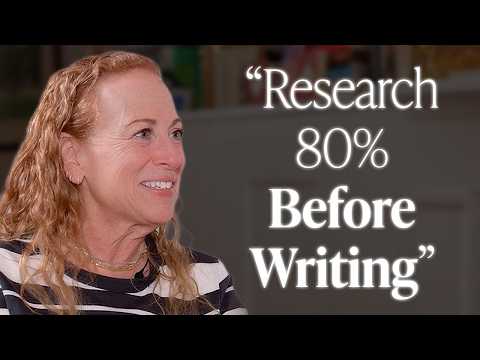 David PerellThe Writing Habits Behind 50 Million Books Sold (Jodi Picoult Interview)
Jodi Picoult says great novels come from a what-if question, deep up-front research, a daily work routine, and a willingness to dismantle your own writing, with fiction's power lying in building empathy.
11 key points · 1 quote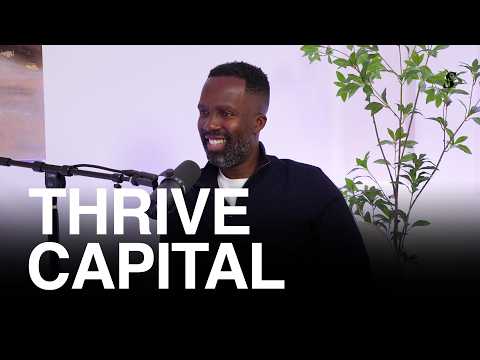 Sourcery with Molly O'SheaThrive Capital’s Dr. Nworah Ayogu on Why Neuralink Is More Interesting Than SpaceX
Nworah argues that AI and new science are reshaping healthcare across the whole value chain, creating trillion-dollar companies, and that the real bottlenecks keep shifting from discovery to trials, manufacturing, delivery and payment.
11 key points · 1 quote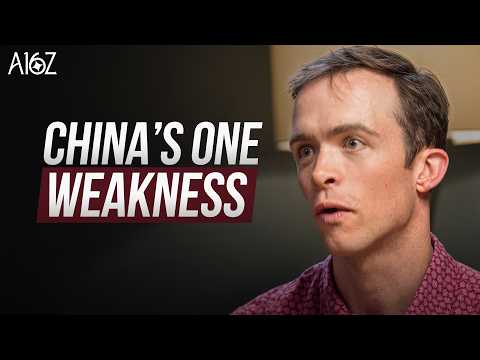 a16zCan Open Models Keep Up With OpenAI and Anthropic? | Nathan Lambert
Nathan Lambert argues that open models can fast-follow the closed frontier, driven by compute, data and talent, while fears of runaway takeoff are overblown and nearer-term societal risks are underprepared.
10 key points My First Millionwe went down the diamond rabbit hole (and it’s unhinged)
The diamond industry shows how marketing can manufacture value: De Beers locked up supply, tied diamonds to love, anchored prices to salary, and now defends margins against cheap lab-grown stones.
7 key points · 2 quotes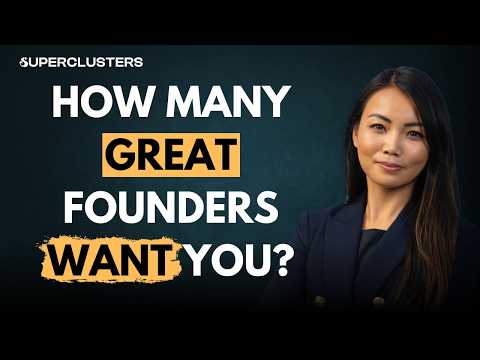 SuperclustersWhat is the density of your founder NPS? | El Pack w/ Charlotte Zhang
Charlotte Zhang answers fund managers' questions on emerging manager selection, recycling early exits, first-round valuations and off-thesis bets, arguing that differentiated strategy, discipline and landscaping matter more than track record.
12 key points Sources with Alex HeathRobinhood’s CEO on letting AI trade your money
Robinhood CEO Vlad Tenev argues AI agents will drive most retail trading, and ties agentic trading, tokenization and private-market access to a broader mission of widening ownership.
12 key points · 1 quote a16z cryptoCan AI Actually Break Cryptography? Experts Weigh In On the FUD
AI's math progress does not change today's cryptographic security; labs should disclose their attempts to break standard assumptions, and existing backups plus crypto agility mean there's no reason to panic.
10 key points · 2 quotes RelentlessWhy Elon Outcompetes Everyone | Casey Handmer, Terraform Industries
Casey Handmer argues Elon's edge comes from speed, intuition and elite talent, while permitting and a bloated tax-and-regulation state strangle big projects, and that AI-driven space compute may supersede that system.
10 key points Dialectic with Jackson DahlUS Chief Design Officer Joe Gebbia on America.gov, Passing the Grandma Test, and Design We Deserve
Joe Gebbia argues that design is respect: from Crit Buns and Airbnb to America.gov, products must carry a story, earn trust through care, and be simple enough for grandma.
9 key points Pirate Wires PodcastThe Fight For Free Internet | PW Pod ft. Mike Solana
Free speech is a binary American creed Europe rejects, the rationalist doom movement behaves unlike people who believe their own stakes, and the aliens its authors invoke undercut the superintelligence doom story.
7 key points · 1 quote The Peel with Turner NovakThis Chemist Left $7B to Back Physical AI Before Everyone Else | Bilal Zuberi, Red Glass Ventures
Bilal Zuberi argues that physical AI rewards fast, commercially minded founders who deploy in the field, and that VC's fee-driven incentives toward size and consensus hurt founders.
10 key points · 1 quote Conversations with TylerLiaquat Ahamed on Financial Crises, Gold, and the Lessons of 1873
Ahamed argues the 1873 crisis was a deflationary shock whose lasting damage was distributional and political, driven by Bismarck's destruction of bimetallism, with parallels to later crises, debt restructuring and bubbles.
10 key points · 2 quotes The Cognitive RevolutionGoverning AI Agents: Alan Chan of GovAI on Monitoring, Agent IDs, Rogue Agents & Preparing for RSI
Alan Chan argues that agent governance, from monitoring and identity to rogue agents and automated AI R&D, is still mostly unsolved, and that measurement, auditors and concrete if-then pause commitments matter most.
11 key points · 5 quotes Capital AllocatorsErlina Yeo Terwelp: Building a Specialist Private Markets Team from Generalist Roots
Erina Yeo Terwelp traces a path from generalist to private markets specialist at Columbia's endowment, sharing how she selects and exits managers, builds the portfolio in a frothy market, and manages people.
8 key points · 2 quotes How I AIMeta Muse Wonder: good for AI agents, bad for design
Claire's first look at Meta's Muse Wonder finds it excellent for agent work, voice assistance and email writing, adequate for backend coding, and poor at design, prototyping and creative tasks.
7 key points TBPNJohn Reviews The Social Reckoning, Muse Wonder, Apple’s HomeView | Diet TBPN
John and Jordy argue The Social Reckoning is a dated, contrived film that skips today's AI questions, then weigh Meta's Muse Wonder frontier claim, Apple's HomeView hub, and an OpenAI recording-device incident.
7 key points Lex Fridman PodcastVisiting Taiwan w/ Jensen Huang | Lex Fridman
Touring Computex and Taiwan's night markets with Lex, Jensen Huang argues that goodwill, long-term partnerships and a technology-and-wealth flywheel, not hoarding, drive lasting advantage for companies and countries.
7 key points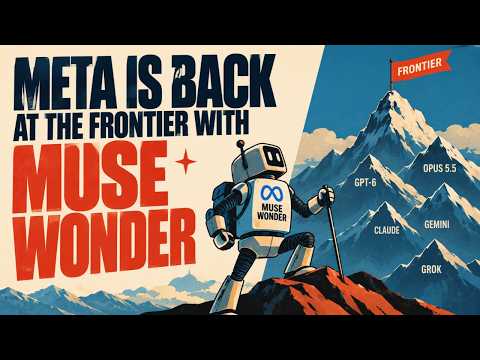 The AI Daily BriefHow Muse Wonder Shifts the AI Landscape
Meta's Muse Wonder models put it back at the AI frontier on benchmarks, though real-world results are mixed, and Meta's fast pace and 'normal technology' stance set it apart from rival labs.
8 key points · 1 quote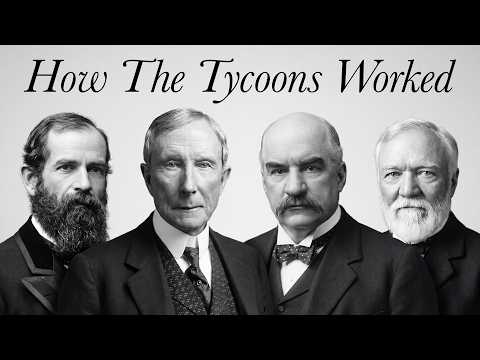 Founders PodcastThe Tycoons: Carnegie, Rockefeller, Gould & Morgan
Charles Morris's The Tycoons argues that Carnegie, Rockefeller, Gould and Morgan, through very different methods, built the infrastructure and scale on which the modern American economy rests.
9 key points · 2 quotes