
Free — sign in with your email, no password.
Podcasts on 5 November 2026
 Dialectic with Jackson DahlAI Friends Aren't Just for Lonely People | Tolan's Quinten Farmer
Quinten Farmer argues AI companions can serve everyone, not just the lonely, if built with a moral point of view: presence over productivity, a character that wants to join your life, and unconditional belief.
12 key points · 3 quotes The Peel with Turner NovakAll His Customers Died. He Grew 51% a Month Anyway. | Ivan Burazin, Daytona
Daytona's Ivan Burazin argues agents will force a security reckoning and CPU crunch, new infrastructure markets crown one to three winners, and attention plus scale beat product polish in a fast-moving market.
12 key points DecoderWhy Trump’s tariffs didn’t bring manufacturing back to America | Decoder
Willy Shih argues that supply chains follow economics, so tariffs mostly trigger circumvention and uncertainty rather than reshoring, and that real US manufacturing needs high productivity, differentiation and strategic planning.
10 key points · 2 quotes Modern WisdomHow War Shaped Human Evolution - David Geary
David Geary argues that male kin-based coalitional violence and between-group competition drove human brain evolution, civilization and modern status-seeking, with lasting effects on sex differences and behavior today.
11 key points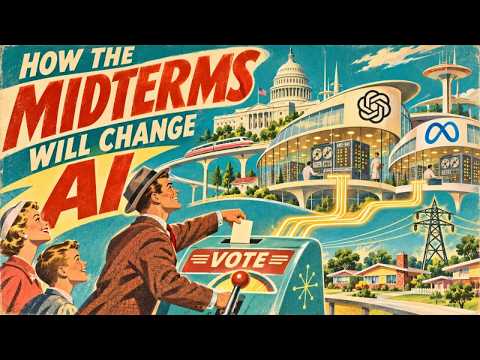 The AI Daily BriefHow the Midterm Results Change AI
The midterm blue wave confirmed that data centers, not AI broadly, are a major vote loser, pushing toward incremental AI rules and community-friendly build-outs rather than a halt, though a bubble-bursting risk remains.
7 key points Training DataBringing Continual Learning to Every Company: Trajectory’s Ronak Malde
Ronak Malde argues that continual learning, where agents improve from real-world traces, is the next learning paradigm, and that Trajectory makes it a simple product so every company can train its own models.
12 key points · 1 quote The Pragmatic EngineerScaling Slack and GitHub with Maude Lemaire
Maude Lemaire explains how Slack and GitHub scaled under strain, from thundering herds, load testing and scatter queries to why platform and product engineers should rotate and why AI still needs human verification.
8 key points Sourcery with Molly O'SheaPlanet CEO Will Marshall talks Space, AI, and Where to find the Aliens?
Will Marshall argues that Planet's daily imaging of Earth, now expanding through sovereign satellites, AI access and orbital compute, turns information into power that can deter war and protect the planet.
7 key points · 1 quote 20VC with Harry StebbingsGoogle Loses $500B in 12 Hours | DoorDash Buys Instacart for $17B | Kalshi Raises $1B
The hosts argue that this week's AI market wobbles are price discovery rather than a crack in demand, while agents, pricing deflation and cheap-to-expensive economics reshape software, marketplaces and venture bets.
9 key points · 2 quotes a16zHow AI Is Turning Figma’s Finance Team Into Builders
Figma CFO Pier argues AI turns finance people into builders and business owners, provided they keep thinking for themselves, share what they build, and hand durable systems to a central team.
11 key points · 1 quote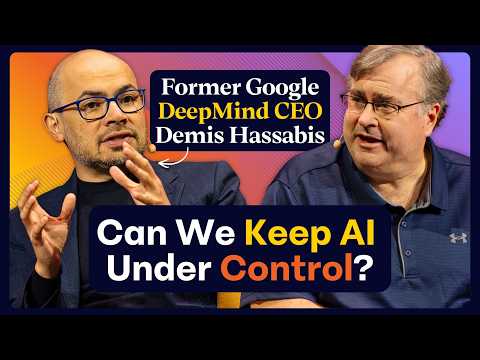 Masters of ScaleGoogle DeepMind's Demis Hassabis: How AI could become dangerous (with Reid Hoffman) | Summit '26
Demis Hassabis argues AI should be aimed at science and health, warns that closed-loop recursive self-improvement is the riskiest path to AGI, and urges building intelligent tools rather than conscious entities.
8 key points · 1 quote The Diary of a CEOIran War Expert: "The 8 Weeks After Midterms Could Be The Most Dangerous!" | Prof Robert Pape
Robert Pape argues the weeks after the US midterms combine a contested transfer of power, a threatened Iran strike escalation and Russian escalation in Ukraine, and that three public firebreaks can still prevent disaster.
9 key points No PriorsTokenization, Agentic Trading, Harmonic: Robinhood's Mission to Expand Ownership with CEO Vlad Tenev
Vlad Tenev argues that broad ownership, extended through tokenization, prediction markets, agentic trading and early access to private companies, makes society more stable, and that AI discovery should be distributed rather than centralized.
10 key points · 1 quote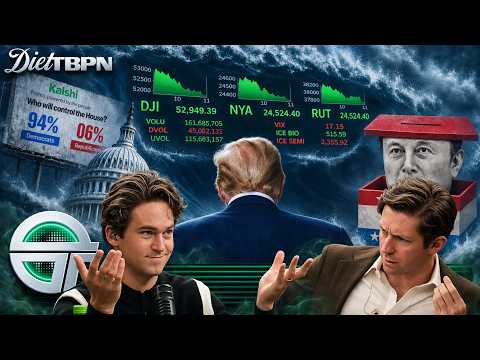 TBPNWall Street Soars, Midterms Shake Up AI Race, Prediction Markets Win | Diet TBPN
The hosts read the midterm results through markets: prediction markets proved accurate, data center moratoria reshuffle the AI trade toward hyperscalers and away from neoclouds, and Elliott warns of a reversal from FOMO to FOGO.
6 key points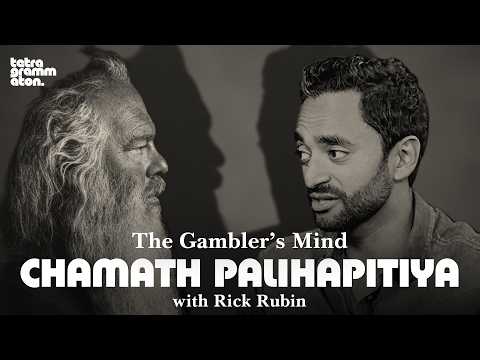 TetragrammatonRick Rubin Explores the Psychology of Risk with Chamath Palihapitiya
Chamath argues that incentives, intuition and a willingness to risk being wrong drive outcomes in politics, science, investing and life, while insecurity and ego cause his worst errors.
11 key points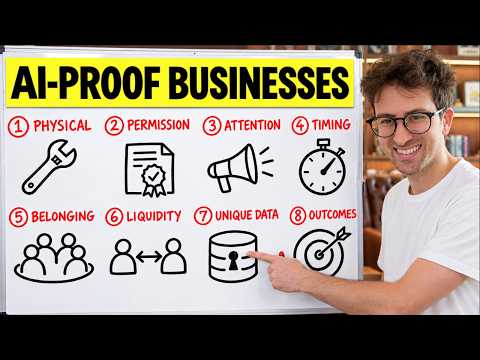 The Startup Ideas PodcastIf You Want To Create Wealth In The Age of AI, Watch This
Greg argues that when AI makes software, content and answers nearly free, durable businesses rest on physical work, permission, attention, trend timing, belonging, marketplaces, unique data and outcomes, and these can be mixed.
8 key points · 2 quotes Founders PodcastHow Eiichiro Oda Works
Eiichiro Oda built One Piece by making the manga he wanted to read, doing nearly all the work himself, and accepting an extreme, compulsive work life that trades efficiency for depth.
9 key points · 3 quotes