
Free — sign in with your email, no password.
Podcasts on 17 October 2026
 Modern WisdomHow To Think Like A Genius - David Deutsch
David Deutsch argues that knowledge grows through error correction rather than certainty or authority, so problems are always soluble, AI doom fears are arbitrary, LLMs lack creativity, and education and discipline are widely misconceived.
11 key points · 3 quotes DecoderWhy Elon Musk wants to sell you cell service | Decoder
Walter Piecyk argues SpaceX is serious about becoming a fourth US carrier, with a modest initial build, and that capital allocation inside Musk's empire, not feasibility, sets the pace of the threat to Verizon, AT&T and T-Mobile.
8 key points · 1 quote The Cognitive RevolutionAI:AM: Where's the Steering Wheel? My Agent Set the Password, Hidden Valence, Proofs Find Linux Bugs
As AI becomes the layer between our intentions and the world's controls, we should keep manual control, watch hidden internal states, and treat reliability and adoption as the priorities.
12 key points · 2 quotes 20VC with Harry StebbingsHorizontal vs Vertical Agents: Who Wins? | The Future of Inference Market | LangChain CEO
Harrison Chase argues that agents stay hard to build, that value accrues to domain experts running vertical agents on open, controllable harnesses, and that demand for inference and agent tokens is far larger than expected.
12 key points · 5 quotes Y CombinatorAI Safety Fact vs. Fiction | YC Paper Club
AI safety debate has slid into hysteria; the real risks are misuse and cyberattacks, and the answers are engineering rigor: formal verification, layered validation, independent investigation, and defense, not speculation about rogue AI.
11 key points · 2 quotes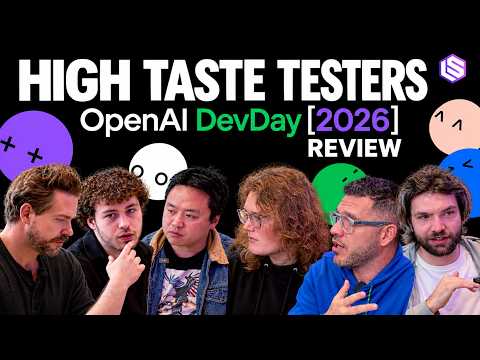 Latent SpaceHigh Taste Testers: OpenAI Shipped Everything. What Actually Works?
Four heavy AI users review OpenAI's DevDay releases and the current model landscape, arguing the labs struggle with product polish while personal assistants, fast decision models and new frontier models reshape daily workflows.
12 key points · 2 quotes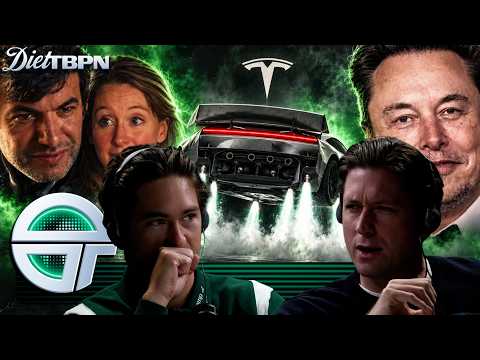 TBPNWe Review ‘You Can See Everything’, Tesla Unveils Rocket Powered-Roadster | Diet TBPN
The hosts rave about Nathan Fielder's film, then dissect Tesla's Roadster reveal as dazzling spectacle with production not starting until 2028, contrasting it with Porsche's retro Mission S.
6 key points All-In PodcastCoreWeave Crash, AI Trade Cracks, Anthropic IPO Red Flags, Bill Gates Doomer
AI infrastructure stress at CoreWeave looks like financing volatility rather than a demand collapse, while the hosts argue Anthropic's IPO is sound but its safety campaigns against open source and small models are self-serving.
10 key points · 2 quotes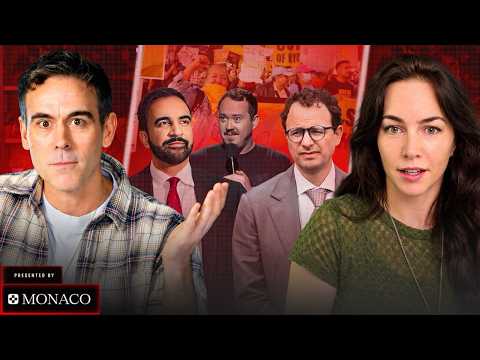 Pirate Wires PodcastYay Illegals! Neigh Horse Carriages! | Pirate Wires Pod ft. Mike Solana & Liv Boeree
Mike Solana and Liv Boeree argue that activists defend the worst immigrants, that NYC's horse-carriage ban rests on absurd logic, and that AI should be built less human-like and that defenses against cyberattacks be hardened first.
9 key points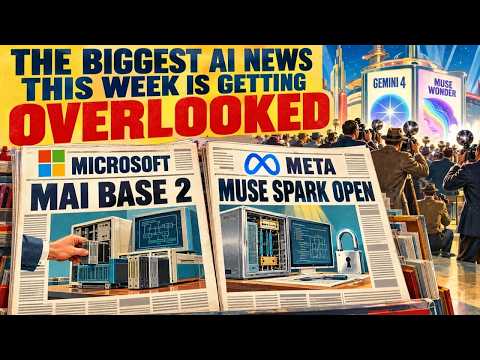 The AI Daily BriefThe Most Important AI Model Announcements This Week
This week's most consequential models are Microsoft's MAI Base 2 and Meta's Muse Spark Open, because they give enterprises more choice, cost control and sovereignty beyond a single frontier vendor.
6 key points · 1 quote