
Free — sign in with your email, no password.
Podcasts on 15 October 2026
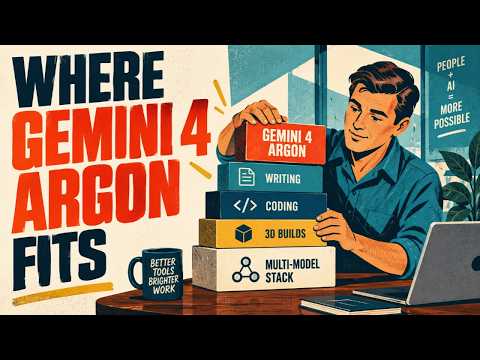 The AI Daily BriefGoogle Is Back in the Model Race With Gemini 4 Argon
Gemini 4 Argon is a frontier-class model at a discount, weak on coding in Google's default harness but promising for multimodal work, writing and Google-ecosystem knowledge work, so the real question is where it fits.
6 key points · 2 quotes Dialectic with Jackson DahlWill AI Make Scientists Obsolete? | Arc Institute’s Patrick Hsu
Patrick Hsu argues that AI, perturbation data and a full-stack institute like Arc can transform biology, yet human research taste, boldness and constant reinvention matter more, not less.
11 key points · 1 quote The Peel with Turner NovakWhy Stripe’s 1st Employee Bought a Bank | Darragh Buckley, Increase
Darragh Buckley argues banking fintech should stop stacking abstraction layers and instead go down a level, owning the bank and exposing raw Federal Reserve capabilities by API, built simply, safely and with an empowered team.
12 key points DecoderWhy Benn Jordan can’t stop investigating Flock
Benn Jordan argues Flock's real problem is its warrantless, insecure private network, and that lasting fixes need local democratic action, transparency, audits and compromise rather than outrage or cameras-everywhere promises.
11 key points Modern Wisdom9 Harsh Truths No One Wants To Admit - Shaan Puri
Shaan argues that success comes from simplifying goals, acting on courage and obsession rather than information, choosing your environment, and defining winning on your own terms with great, playful relationships.
12 key points · 1 quote 20VC with Harry StebbingsValar Atomics Sues Day One Ventures | Meta's Back to the AI Frontier | NVIDIA's $30B Reflection Deal
The hosts debate pro rata fights, Meta's model push, big-tech AI acquisitions, record decacorn counts and the bet behind them, deflationary model pricing, and why scale is the only safe place in post-apocalypse SaaS.
11 key points The James Altucher ShowWhat Almost Went Wrong in My First Year as Kellogg CEO | Carlos Gutierrez
Carlos Gutierrez draws on his Kellogg and Commerce Secretary experience to discuss ambition, ADHD, first-year CEO mistakes, how China negotiates, how government differs from business, and why staying power matters in a career.
10 key points a16zWhat Happens When AI Agents Can Spend Your Money?
Terry Angelos argues that payment credentials turn AI agents from spectators into actors, and that open standards like agentic tokens, not walled gardens, will let agent commerce scale while keeping chargeback and merchant relationship rules intact.
9 key points Masters of ScaleRich Roll on his "crash course" in entrepreneurship
Rich Roll argues that operating with integrity, whether in hosting, brand deals or building a network, is a long-term advantage in an algorithm-driven media world, a lesson shaped by his path through sobriety.
9 key points BG2PodJensen Huang | Does AI Revenue Justify Capex, '27 AI Bottlenecks, Singularity, Open vs Closed & more
Jensen Huang argues AI compute demand is compounding because reasoning and agents need far more inference, that safety is part of the technology, and that Nvidia's demand rests on far more than two labs.
11 key points · 1 quote Capital AllocatorsCharlie Rose: How Invesco's Equity Team's Failed Bids Become Credit Advantages
Charlie Rose argues that a property-first, relationship-based credit strategy that borrows equity-side expertise and puts downside protection ahead of yield can win business and limit losses across cycles.
11 key points · 2 quotes The Diary of a CEONo.1 Neuroscientist Reveals How To Unlock Superhuman Focus & Perfect Memory! - Dr. Sahar Yousef
Neuroscientist Sahar Yousef argues that tech default settings are engineered to hijack attention, and that cutting noise, working in focus sprints, and aligning with biology restores focus, memory and intentional living.
12 key points · 2 quotes No PriorsRevolutionizing Cybersecurity and AI-Driven Science with OpenAI President Greg Brockman
Greg Brockman argues AI now produces genuinely new knowledge, from math to biology, and that the same capability will remake work, software and security while keeping humans in control.
12 key points TBPNOpenAI Bugging Incident, Are Your Devices Listening? Xbox Launches Remix Lab | Diet TBPN
The hosts cover the OpenAI bugging incident, argue ambient ad listening is mostly myth despite real TV privacy concerns, and discuss Xbox Labs' embrace of decompiled game remixing.
6 key points All-In PodcastElizabeth Holmes' Husband Billy Evans: The Trial, Prison & Nathan Fielder’s Documentary
Billy Evans, Elizabeth Holmes's partner, argues the public story of Holmes is distorted, describing the person he knows, the trial and sentencing math, life with her in prison, and the documentary meant to let people judge her themselves.
11 key points · 1 quote TetragrammatonRick Rubin Explores the Connection Between Science and Spirituality With Mark Booth
Mark Booth argues that materialism is a temporary blip: esoteric traditions and the new physics both point to a universal intelligence in which humans are connected, and in which ideas are discovered rather than invented.
11 key points · 1 quote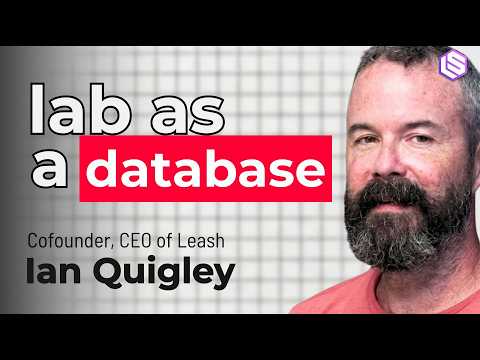 Latent SpaceWhy Models Trained on Public Data Learn the Chemist, Not the Chemistry — Ian Quigley, Leash Bio
Ian Quigley argues that small-molecule ML fails when trained on public data that encodes chemist behavior, and that Leash's pooled, physically grounded screening data, engineered mutations and language-model agents are a better route.
9 key points