
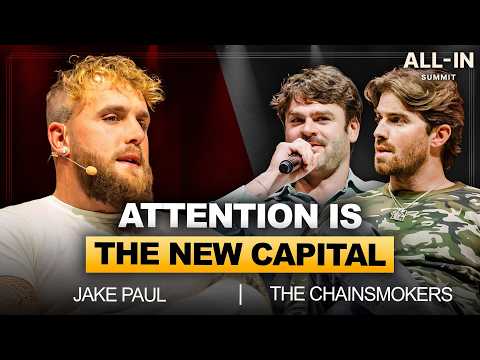
Jake Paul & The Chainsmokers: Turning Fame into Funds, Jake Enters Politics? & Venture Bubble Signs
Jake Paul and The Chainsmokers explain how they turned attention and fame into businesses and venture funds, arguing that results and hard work, not celebrity, decide who lasts.
Watch on YouTube ↗Charlie's summary
- ▶ 3:10
Vine's top creators lost their leverage by demanding too much, and the platform died within months
Jake says the top 20 Viners told Vine to pay them or they would stop posting, since they brought the content, views and fans. Vine offered $1 million split between all 20. The creators wanted $1 million each per year. Vine refused, they moved to Facebook, YouTube and Snapchat, and “within a couple of months, the Vine died out.” Jake offers it as a lesson for business owners.
- ▶ 9:24
Jake Paul built MVP by copying his Team 10 model: use a built-in audience to grow fighters underneath him
Jake says most boxers build a record against easy opponents before anyone hears of them. He already had about 100 million followers who watched every fight, so he replicated his Team 10 influencer model with fighters. MVP now has 400 boxing and MMA fighters and has merged with PFL. He argues the UFC pays about 15% of revenue to fighters against roughly 50% in other leagues. That gap is his opening to attract talent.
- ▶ 12:04
In the attention economy, capital is a commodity, so attention on a cap table is what founders want
Jake says his fund believes “we're in the attention economy and that capital um is a commodity.” He points to Elon pushing his companies through Twitter's first suggested follow. He says he adds value through reach plus marketing and branding experience. With OpenAI's Sora, he says he suggested a social app and granted his name, image and likeness. He rejects the label celebrity investor and wants to be compared with Sequoia on DPI and IRR.
- ▶ 17:18
Jake predicts the next generation of politicians will be social-native creators with built-in followings
Asked where he'll be at 40, Jake says politics. He sees it as a way to help people, as he has done by raising pay in women's boxing. He thinks future office-holders will have a built-in audience they can talk to and capture the vote with. He names Spencer Pratt and Nick Shirley as examples, and says he has been saying this for five years.
Give your email to unlock the rest of the key points — for every episode.
Do more with Charlie
Free — sign in with your email, no password.