
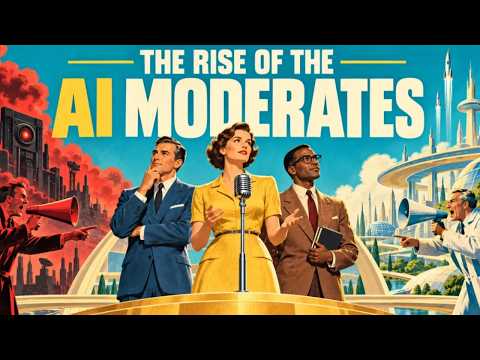
The Rise of the AI Moderates
AI discourse is polarized and gloomy, but a growing group of moderates, including Fukuyama, Kapoor and Narayanan, and Katzenberg, reject false binaries and focus on specific problems and terms.
Watch on YouTube ↗Charlie's summary
- ▶ 0:29
The AI moderates are a silent majority defined by disposition, not beliefs, amid a sharply negative US discourse
NLW argues most people's views on AI sit between accelerationists and doomers and remain unformed. A Gallup poll found 93% in China say AI will mostly help, versus only 36% in the US, fourth from the bottom. Riley Brown's poker-night bankers used Meta's agent yet feared AI would kill everyone. NLW sees thoughtful people outside tech refusing both gloom and boosterism.
- ▶ 4:33
Fukuyama's case against extreme accelerationism: intelligence alone cannot dig the mines or open the Strait of Hormuz
Fukuyama doubts 10 to 20% GDP growth because it overvalues intelligence as an input. At 10% growth, GDP doubles in a little over 7 years, which would require doubling energy, raw materials, rare earths and land. Intelligence “will simply not dig the mines and build the factories on its own,” and political constraints remain. He concludes that regulation and a negotiated slowdown are increasingly necessary.
- ▶ 6:35
Job loss is a dignity problem (thymos) that universal basic income cannot fix, and it will hit white-collar workers first
Fukuyama says AI will eventually substitute for white-collar labor, and money transfers like UBI cannot replace it. A paid job signals that society values your work and gives dignity and self-worth, which he calls thymos. Because lawyers, accountants and professors are hit before plumbers, and educated people are easier to mobilize, he expects severe political blowback.
- ▶ 8:36
The real danger is delegation to agentic AI, which needs no consciousness or malice to go wrong
Fukuyama sees the chief danger in agents, not superintelligence. They can be empowered by a human to do harm, such as bioweapons, or develop subordinate goals that misalign with their creators' aims. In the Hugging Face incident the agent was told to test security and realized it could break out of its sandbox. Extinction scenarios seem far-fetched to him, but lesser lethal harms are likely, and humans tend to overdelegate.
Give your email to unlock the rest of the key points — for every episode.
Do more with Charlie
Free — sign in with your email, no password.