
Why Today’s AI Metrics Are Being Gamed & What Investors Need to Watch | Menlo’s Venky Ganesan
Venky Ganesan argues that in a frothy AI market, venture investors should treat early checks as options, size up only on proof, distrust gamed metrics, lock in gains, and keep ego out of deals.
Watch on YouTube ↗Charlie's summary
- ▶ 1:01
Take some chips off the table: the right answer depends on who you are and your balance sheet
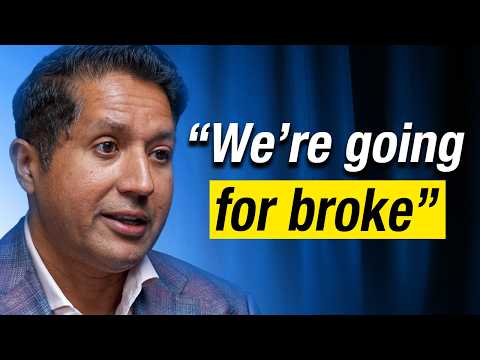
Venky bought $5,000 of Avanex at IPO, watched it reach $200,000, ignored his fiancée's advice to sell for a down payment, then sold after a 90% drop for about $8-9,000. His lesson is to take some chips off. But he says the advice isn't one-size-fits-all: a 24-year-old with little money should sell, while Menlo today is “going for broke” for grand slams.
- ▶ 4:15
Don't time the cycle: when the music plays you dance, but manage it with selectivity and position sizing
Venky says no one knows when this ends. Smart firms that entered the dot-com boom in '93-'94 stepped out in '96-'97, missed '97-'99, and stepped back in 2000 at the peak. His answer is to keep playing but be more selective and use portfolio composition and position sizing to cushion a turn. Round sizes may look absurd now, but he cautions that “a dot is not a line.”
- ▶ 6:58
Treat each seed check as an option bet, and size up only once revenue proves an outlier
Venky thinks a venture portfolio is a set of options. Each seed check buys the right to see whether a company is an outlier, so you need enough at-bats. Only when quantifiable, revenue-based evidence shows an outlier do you put real weight behind it. He admits large funds like Menlo are somewhat indifferent to seed prices because the check is about buying a seat at the table.
- ▶ 9:05
Any metric investors weight heavily gets gamed, so back founders focused on terminal value, not markups
Venky expects this cycle's accounting creativity to surface within a few years. His example is net revenue retention: a $10 PO followed by a $50 PO a week later shows 500% NRR, versus 100% for a single $100 PO. He also describes markup reflexivity, where a markup attracts capital, talent and further markups, until it stops. His filter is whether founders chase terminal value or markups.
Give your email to unlock the rest of the key points — for every episode.
Do more with Charlie
Free — sign in with your email, no password.