
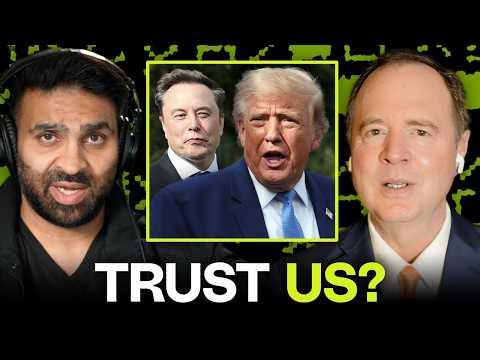
Adam Schiff says voluntary AI rules are meaningless
Senator Adam Schiff argues that voluntary AI pledges are meaningless, that AI needs a powerful expert regulator and narrowed liability shields, and that corruption and concentrated wealth distort policy.
Watch on YouTube ↗Charlie's summary
- ▶ 4:11
The White House AI safety pledge is meaningless because companies fear a vengeful president, not because the risk is small
Adam calls the voluntary pledge signed by tech CEOs “very dissonant, very jarring.” He thinks the executives say what the president wants in his presence while privately asking for regulation. Neil agrees the pledge's language, such as empowering an internal team to check controls, “feels like nothing.” Adam's real worry is recursive AI, where we have less sense of what models are doing, which he calls a national security concern “of the highest order.”
- ▶ 7:25
AI companies took copyrighted work first and left the legality for later, so Schiff wants training data preserved
Adam says the industry decided it was in a race and would “vacuum it all up” and worry about legality later. He and Senator Curtis are working on a first step: companies must retain records of which copyrighted material trained their models. Only then can Congress debate what counts as fair use. Adam notes the industry is not uniform, since Amazon's film library is not its core business.
- ▶ 12:42
The First Amendment didn't block social media regulation; Section 230 immunity and industry money did
Neil argued social media rules stalled on speech protections. Adam disagrees: companies used the First Amendment as a budgeon against any meaningful regulation. In his view, Section 230 gave them broad immunity in exchange for promises to remove bad content, and they did not keep those promises, as he says X shows. He would narrow 230, perhaps with a safe harbor for companies following best practices. He fears AI money will cause the same paralysis.
- ▶ 18:32
Congress's failure on small social media fixes shows why AI can't wait for calamity
Adam notes that even small measures, like stopping platforms from encouraging suicide, were hard to pass, and litigation worked better than legislation. On AI, chatbot protections for kids have progressed but are not at the finish line. He asks what that says about Congress's capacity for the big things. Normally Congress waits for a calamity, but with AI the calamity could be massive, so he says they can't afford to wait.
Give your email to unlock the rest of the key points — for every episode.
Do more with Charlie
Free — sign in with your email, no password.