
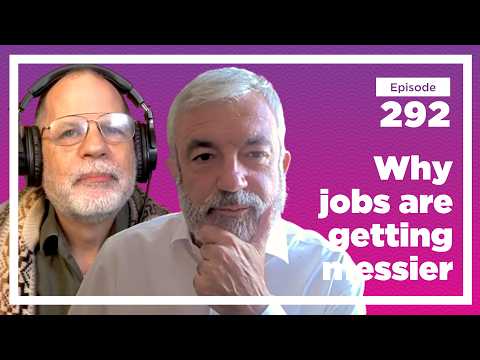
Luis Garicano on Spain, Europe, and the Future of Work
Garicano argues that Spain and Europe are held back by political economy, ageing electorates and rigid institutions, and that AI will make jobs messier rather than cause mass unemployment.
Watch on YouTube ↗Charlie's summary
- ▶ 0:33
Spain's housing is rigid because people tie building to corruption and high prices, so supply barely responds to demand.
Luis says Spain once built up to 800,000 houses a year, but the bubble and crash linked easy building to corruption. Municipalities lost power over land, leaving people scared and decision-makers disempowered. Now hundreds of thousands of immigrants arrive each year while fewer than 100,000 houses are built, and there is almost no YIMBY movement.
- ▶ 4:56
Spain's productivity stagnation is a political economy problem: the country is governed by and for older retired people.
Luis notes productivity hasn't grown for three decades. Spain has among the lowest fertility and highest life expectancy in the world, and he says 100 percent of GDP growth since 2008 has gone to pensions. Little goes to productive investment, and the highways and high-speed rail lack maintenance. He thinks reform will probably need a crisis, as in 1959, the 1980s and 2012.
- ▶ 9:27
Industrial policy only works if losers can fail and goals are clear, and Europe's car policy meets neither condition.
Drawing on Rodrik's review, Luis says industrial policy works under some conditions. Losers must be allowed to fail and the objective must be clear-cut. In European cars, the legacy firms capture the aid and goals conflict across environmental, labor and security aims. He thinks Europe's real problems are labor rules that block adaptation and a bias toward incremental over radical innovation.
- ▶ 22:56
Party discipline means parties promote people whose outside option is zero, which explains weak leaders in Spain and Brussels.
Luis says the thing he understood better after doing politics is that voters are inattentive and that party discipline mediates between voters and the law. Parties want people who owe them their position and will not complain. He applies the same logic to choosing European Commission presidents: leaders want someone who “won't give them any trouble,” and he says weak leadership is by design.
Give your email to unlock the rest of the key points — for every episode.
Do more with Charlie
Free — sign in with your email, no password.