
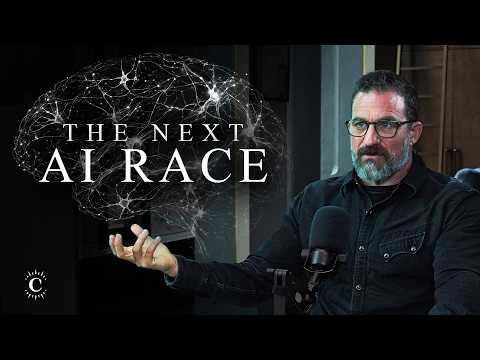
How Founders Can Build the Energy to Do More | Andrew Huberman
Huberman argues that high performers should assess their own energy and sleep honestly, learn to switch off at night, and expect AI companies to move toward non-invasive reading and writing of the brain.
Watch on YouTube ↗Charlie's summary
- ▶ 2:13
Know your real sleep need: believing you can copy Elon's four or five hours is a delusion
Andrew says some people need less sleep, but most don't, and he calls copying Elon's four or five hours ridiculous. Run an honest self-assessment. His own pattern: 7 hours feels great, 8 leaves him groggy, 6 is fine for a day, and two nights of 0 to 4 hours crater him. Know what you need at this stage of life and company, and what you can get by on.
- ▶ 4:52
Grind in the first years of a company, then add rest and balance
Andrew worked 80 to 100 hour weeks in graduate school and says it served him. For roughly the first four years of a company, the goal is to not die: get a lot done and avoid injury or chronic illness. After that, build in rest across the day, week or month to protect focus and creativity. He says mastery shows its cost when someone's schedule didn't match their physiology and they look ten years older.
- ▶ 7:01
Switching off at night is a trainable skill with three parts: quiet thoughts, slow heart rate, forget limb position
Andrew says falling asleep needs three things, in any order, ideally combined. To quiet thoughts, move attention to pure sensation: feet, legs, breathing, sounds in the room. To slow the heart, use long exhales with passive inhales, which slow the heart through the vagus nerve. To lose track of limb position, mimic rocking: move your eyes side to side and up and down under closed lids. He says this is not meditation.
- ▶ 24:57
Every big AI company will become a biotech company, because the goal is non-invasive brain read/write
Andrew goes on record that Meta, OpenAI and Anthropic are not just LLM companies. He says their leaders understand a lot of neuroscience and will all say the goal is to read and write the brain non-invasively. The hard problem is stimulating or quieting areas with spatial and temporal precision, in graded amounts. He imagines cranking motivation up during hard work and turning it off after. He calls this “the real arms race of AI.”
Give your email to unlock the rest of the key points — for every episode.
Do more with Charlie
Free — sign in with your email, no password.