
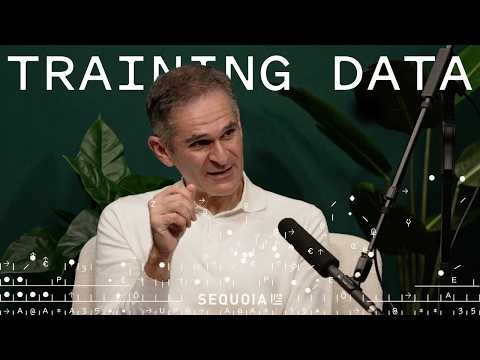
Google's Head of AI Infra, Amin Vahdat, on the Architecture of Intelligence
Amin Vahdat argues that AI infrastructure is won by co-designing chips, models, networks, buildings and power around delivered workload performance, where specialization pays only if the workload is durable and large.
Watch on YouTube ↗Charlie's summary
- ▶ 1:35
AI data centers differ from traditional ones by specialization: they are co-designed with the hardware inside them
Amin says traditional data centers are planned over 25 to 30 years for generic gear, while hardware lives about six years. AI racks draw hundreds of kilowatts, versus 10 to 40 for a storage rack, so a building built to hold both gets too big and overbuilt. AI buildings are therefore co-designed with the hardware, down to cooling and power distribution.
- ▶ 5:20
Flops is a vanity metric; hold yourself to goodput, which counts work lost to failures
Amin says peak flops is a theoretical per-chip number, while what matters is delivered performance for a real workload. Goodput is a Google term and subtracts the time lost to failure, checkpoint restore and restart. At 100,000 accelerators, something fails multiple times a day or even an hour. His analogy: redoing steps on paper is throughput, not goodput.
- ▶ 12:51
Capacity must double every six months, and most of that comes from software and models, not silicon
Amin clarifies the target is token-generation capability, not raw flops. He says most intelligence-per-watt gains come from model-side improvements, then software, from “dozens or hundreds of individual optimizations.” Hardware gives a roughly 2x or more yearly lift that everything above it can count on as a multiplier.
- ▶ 15:31
Specialize a chip only when the workload is big and durable: why Google split TPUs into 8i and 8t
Amin says TPUs began in 2013 as a contrarian bet against the “bitter lesson of chips” that specialization never wins. Today the question was one chip or two. Because inference was projected at 30 to 60% of the market, Google built separate inference and training chips. A fleeting workload gives too narrow a window, and each chip can still do the other's job to avoid forecasting the split six years out.
Give your email to unlock the rest of the key points — for every episode.
Do more with Charlie
Free — sign in with your email, no password.