
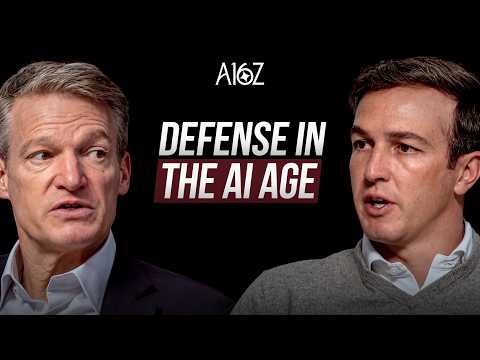
The Biggest Shift in Cybersecurity in 30 Years
Kevin Mandia argues AI is the biggest shift in security in 30 years: defenders need AI offense to train AI defense, humans must leave the detect-and-respond loop, and startups must scale fast.
Watch on YouTube ↗Charlie's summary
- ▶ 3:07
You don't have a defense without a great offense: train defense against AI attackers, like a practice offense
Kevin says Armadin exists because the good guys must build the offensive cyber cannon and fire it at their own networks. Its first product, Armadin Red, finds exploitable risk. Armadin Blue then creates compensating controls. His sports analogy is the 2000 Baltimore Ravens defense: it needs a practice offense that pushes it. If you are “five minutes ahead” of the bad actor, you win.
- ▶ 4:42
AI attacks win on scale and speed, so the old sniper-round model of nation-state hacking becomes a drone swarm
Kevin says human attackers had to be selective and pick one path in. AI does in a microsecond what would take 70 humans. Nations have used a sniper round, going deep on about 30 defense contractors, but AI makes it more like a drone swarm: louder and sloppier, but more comprehensive. Less capable attackers will look far more successful, and attribution gets harder. Kevin calls AI the equalizer.
- ▶ 11:30
Continuous testing works by mapping a metadata twin of your network, then polling for change and attacking the change
Armadin's hyper attack throws a swarm of agents at a network and maps every service, route and asset, producing terabytes of metadata. It then polls that map like a heartbeat for changes such as a new app, route or machine, and attacks only what changed. Constant attack is cost prohibitive and unnecessary. Kevin says that when a zero day hit over a weekend, the heartbeat already existed, so Armadin could check exploitability before attackers did.
- ▶ 15:15
AI red teaming will replace pentesting, which only scans for what is already known
Kevin sees pentesting as a hygiene step that scans for known issues and produces long lists of vulns that don't matter. Armadin carries out the exploit, so there are no false positives. It works black box from the internet and finds logic flaws in custom apps. Kevin says it has found over 90 zero days at Fortune 500 customers since January 2026, and he calls source-code scanning noise by comparison. Customers go into incident mode.
Give your email to unlock the rest of the key points — for every episode.
Do more with Charlie
Free — sign in with your email, no password.