
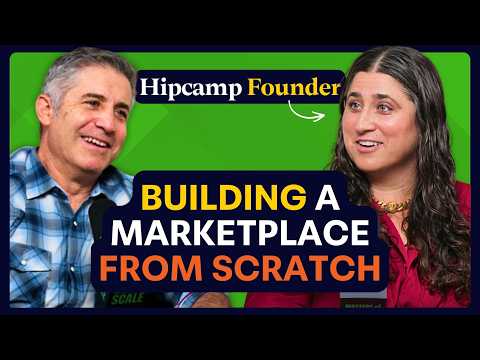
How Hipcamp's Alyssa Ravasio found a business model worth building
Alyssa Ravasio explains how Hipcamp pivoted from a camping search engine to a private-land marketplace by choosing the business model with the largest long-term impact, and what scaling it demanded of her.
Watch on YouTube ↗Charlie's summary
- ▶ 8:50
Customer anger about scarcity revealed the real problem: not enough campsites, not poor information
Hipcamp began as a directory pulling together fragmented public campground data. When Alyssa promoted campgrounds that weren't fully booked, she got angry letters: “That's the last place that I could still go without 6 months notice.” She saw it was genuine scarcity. Her mission was to get more people outside, but existing infrastructure was already at capacity. Complaints like these can point to the root problem rather than a messaging problem.
- ▶ 9:51
Pick the business model by asking what impact it would have if wildly successful in 10 or 20 years
At an Italian restaurant in North Beach, Alyssa wrote out models on a paper tablecloth, from advertising to gear delivery to private land. She had been dismissive of private land. Then she asked what impact each would have if wildly successful in 10 or 20 years, and private land “jumped off the map.” It would solve the root cause, supply, and turn scarcity into abundance. Many models only help people trade money for time, which didn't compel her.
- ▶ 12:28
Validate supply fast by asking users for introductions, and bootstrap it with public data
The morning after the dinner, Alyssa emailed her whole user base offering $500 for an introduction to a private landowner who would host campers. She spent the next week visiting places, including Mendocino Magic, where the landowner was trying to avoid selling redwood land that would be logged. Public campground data had already bootstrapped supply and demand, so when private land was added, demand was ready and it “started working pretty quickly.”
- ▶ 14:02
Insurance was a turning point for the company because hosts wouldn't sign up without it
Alyssa says getting insurance was one of the turning points for Hipcamp. A general policy now covers landowners and Hipcamp across several layers. Before Hipcamp had a policy it could share with landowners, it was almost impossible to get anyone to sign up. Liability is a core piece of what makes supply-side participation possible, not a back-office detail. Many hosts told her they wanted to host but couldn't afford insurance or figure out marketing.
Give your email to unlock the rest of the key points — for every episode.
Do more with Charlie
Free — sign in with your email, no password.