
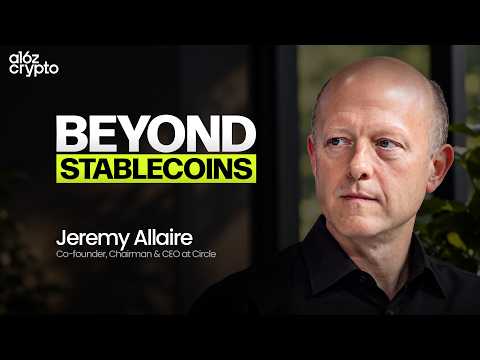
What Comes After Stablecoins? (ft. Circle CEO Jeremy Allaire and Chris Dixon)
Jeremy Allaire and Chris Dixon argue that blockchains are becoming economic operating systems, that Circle's Arc is built for institutions and machines, and that no one yet holds a moat in this early market.
Watch on YouTube ↗Charlie's summary
- ▶ 7:08
Arc exists because existing blockchains weren't built to meet the infrastructure standards that central banks and regulators expect.
Jeremy says Circle first built USDC on Ethereum and partnered with Solana and others, but institutions and regulators began expecting standards that no network was purpose-built for. So Circle built Arc from scratch, borrowing from blockchain incentive design, open source, and Google's Android model. The goal is a network owned by a broad set of stakeholders that central banks would accept for “real money and real investment contracts.”
- ▶ 12:16
An internet-scale economic operating system needs known validators and geopolitical diversity, not just American control.
Arc's validators must meet operational, security and compliance standards, which Jeremy says enables deterministic settlement finality in a fraction of a second. He wants every major geoeconomic bloc running infrastructure and holding a stake. About 10 or 11 firms launched with mainnet, with up to 40 slots, and validators will vote on adding members. Without this diversity, Jeremy says, internet scale is “very, very hard” if it's an American thing.
- ▶ 15:53
Circle's defense is stacked network effects: utility, liquidity, regulated infrastructure, and CCTP interoperability.
Jeremy says more apps on USDC draws more developers, and deep liquidity at Binance, Coinbase and Hyperliquid makes it capital efficient. Circle mints and redeems $150 billion a quarter. Its CCTP carries roughly half of cross-chain value, as high as 70% in recent quarters. Arc assets can ride the same highways that only USDC could use before. Jeremy expects a “winner take most” market, not winner take all.
- ▶ 19:59
Nobody has a moat yet: blockchains are in the mobile era's pre-iPhone phase.
Jeremy compares blockchains to mobile operating systems, which spent 15 to 20 years in failed attempts (Palm, BlackBerry, Symbian) before Apple and Google got it right. He sees crypto in that same long journey, with apps still not viable for mainstream users and very few active developers on any network. Software is also getting easier to write. His conclusion: “no one has a moat.”
Give your email to unlock the rest of the key points — for every episode.
Do more with Charlie
Free — sign in with your email, no password.