
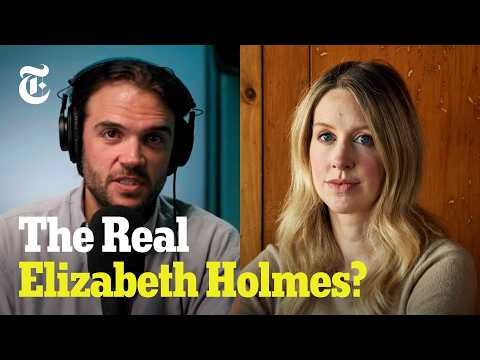
What ‘You Can See Everything’ Leaves Out About Elizabeth Holmes | Hard Fork
Three Times journalists who covered Elizabeth Holmes dissect the new Fielder documentary, arguing she still performs and evades, that gender and Silicon Valley's exaggeration culture explain her persistence, plus tech headlines.
Watch on YouTube ↗Charlie's summary
- ▶ 6:06
Early red flags were visible from the start: bold claims, no peer-reviewed science, and secrecy
John noticed that a 2014 New Yorker profile described bold technology claims with no peer-reviewed studies and a note about secrecy. A skeptical Missouri pathologist then confirmed his doubts. Caitlyn, who interviewed Holmes in 2013, could not see the lab or talk to a lead scientist, and in effect Holmes stood in for one. She later regretted writing about her before the science could be validated.
- ▶ 16:26
Holmes's new look is itself a strategy: relaxed, intimate, and the opposite of the turtleneck persona
Erin notes the film has no turtlenecks, few dark colors, and her hair down. Caitlyn argues the beach scenes and child telegraph ease so viewers feel they are inside her real self. John says her combative, ruthless side only flashes when Fielder presses her and she snaps “I did not.” The panel reads the film as a performance the filmmakers chose carefully how to edit.
- ▶ 20:36
Holmes keeps shirking responsibility, and the film gives her enough rope to hang herself
John called her tears at the photography studio, claiming entourage pushed her into the spotlight, a brazen lie, since trial texts showed she enjoyed and planned the coverage. He sees her also implicitly blame Sunny Balwani. When she tells Fielder she has never lied, John thinks it looks absurd and hurts her. Caitlyn adds that empathy for her as a mother about to go to prison doesn't cancel the calculation.
- ▶ 28:52
Her enduring fascination comes from gender, the medical stakes, and her own pursuit of attention
John says people are captivated by the psychology of deceit, especially in a woman, and by the public health stakes. Caitlyn and Erin say gender drove both her rise, when the press hunted for female founders, and the lasting scorn. John adds that Holmes herself keeps the story alive by inviting filmmakers in 34 days before prison, seeking attention.
Give your email to unlock the rest of the key points — for every episode.
Do more with Charlie
Free — sign in with your email, no password.