
Fundamentally, a lot of this robotics data is three things. It's pixels, its actions, and its logic. And so we don't have access to a large amount of this curated and processed and clean data to be able to then train these models to understand what it is to be in the physical world.
← 20 October 2026Training Data
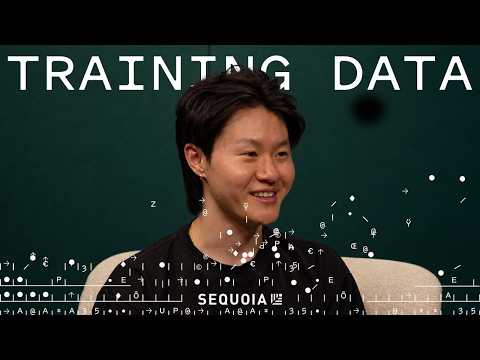
Inside the Robot Data Factory: Mecka's Josh Gao on Sensorizing Humans to Train Robots
Josh Gao argues that robotics is data-constrained and that sensorizing humans at scale, within a mix of data types, will unlock useful robots step by step, starting with constrained commercial tasks.
Watch on YouTube ↗Word for word
It doesn't have to be so binary, that one day we've unlocked robotics or not. It is going to be a slow creep up into the world. A great way to get there is that with some of this base pyramid built up, where we are seeing the generalizations, we are seeing these scaling laws at play, that gives people the courage to scale up. And with that courage, can we, one, have some generalizability in some of these environments? Can we then also collect a lot of the in-domain, in-task data that closes that gap in post-training?
Do more with Charlie
Analyze any YouTube videoPaste a link — get its key points and best quotes in minutes. 10 videos a day.Paste a YouTube link →Your own podcast feedAdd up to 10 YouTube channels you follow. Charlie reads their new episodes for you.Add your channels →
Free — sign in with your email, no password.