
Tom Bilyeu's Trick for Making AI Tell You Why You'll Fail
Tom Bilyeu argues AI erases technical and spending moats, rewards people who prompt it skillfully and push back on it, and will hurt those who refuse to adapt, while the infrastructure boom likely faces a correction.
Watch on YouTube ↗Charlie's summary
- ▶ 2:32
In the age of AI, technical and spending moats vanish; brand and network effects are what remain
Tom says anyone competing with his game uses the same AI tools, so lead time is short-lived. He expects the durable advantages to be brand and network effects. His plan: integrate AI “as fast and as deeply as we can,” avoid AI slop, ship quickly at high quality, then stay adaptive. His ten years of mastering the YouTube algorithm is the skill he thinks will matter when an avalanche of AI content hits.
- ▶ 8:41
AI compresses the path to a first sale, but it can't hand you product-market fit
Tom has seen the gap between a first sale and a first $10,000 month shrink dramatically. He doesn't expect runaway growth, because AI is commodified and can't find a unique, urgently needed idea on its own. Founders need a proprietary layer between themselves and the commodity intelligence. His example is a game asset that took 3 months and four or five people, which AI turned into an afternoon.
- ▶ 10:12
Give AI a researcher identity, then chain roles, to compress months of startup work into a weekend
Tom uses AI as a thought partner. First he casts it as a researcher hunting for pain points people already have, like those who make protein bars at home. Then it becomes a food scientist, then a logistics helper tracking down ingredient suppliers. He says this cuts a roughly 6-month phase to a three-day weekend. Before building anything, run a minimum viable test to prove people care.
- ▶ 12:14
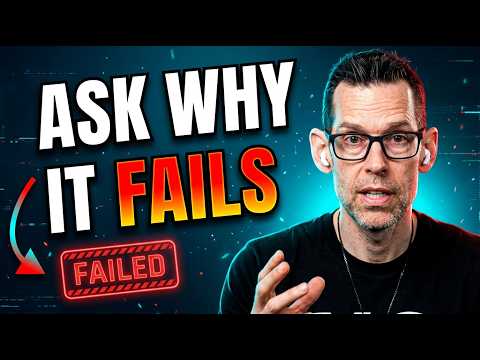
Ask AI “Why is this going to fail?” because it is built to please you
James warns that AI wants to flatter you so you keep interacting, even about a Saturn vacation business. Tom's fix is a standing document saying he wants disconfirming evidence, not agreement. He asks why an idea will fail, what the smartest skeptics say, and whether anyone has tried it before and why they failed. He adds that “the smarter the person, the smarter the AI,” so weak answers often reflect weak pushing.
Give your email to unlock the rest of the key points — for every episode.
Do more with Charlie
Free — sign in with your email, no password.