
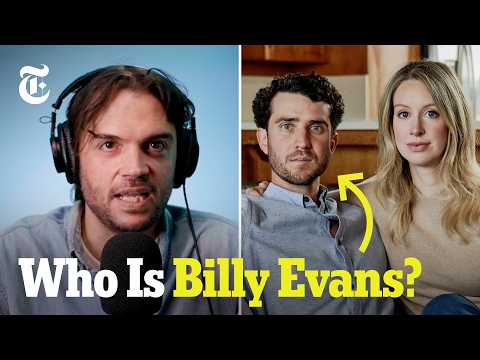
A Spoiler-Filled Guide to 'You Can See Everything' | Hard Fork
Reporters dissect Billy Evans and Elizabeth Holmes after the documentary, arguing Evans's startup is thin, Holmes's claims of confusion are calculated, and the AI financing boom shows early strain.
Watch on YouTube ↗Charlie's summary
- ▶ 2:32
Billy Evans's blood-testing startup, Hemanthus, was a tiny pet-testing venture that hid its Holmes connection while secretly being filmed
Rob Copeland thought the tip was a scam. The startup targeted pet blood tests at about a dollar each, versus roughly $500 at a vet. Billy cited USDA correspondence as proof of light regulation, but the USDA told Rob that's not what it means. Billy never mentioned Elizabeth, and Rob had no idea a documentary crew had been filming for two years.
- ▶ 7:13
The company raised only about $3 million, far too little to be a real blood-testing business
Rob says the startup raised roughly $3 million, and the one investor he found ran a Tapas restaurant in Austin whom Billy called a friend. It is real in that it raised money, but it has no working product. Billy aimed high anyway, pitching Jim Breyer and Michael Dell. Breyer went on record that he passed, which is unusual because investors rarely say publicly that they declined a company.
- ▶ 11:19
Billy's interviewing style looks like one day of PR training: he answers questions nobody asked
Aaron Griffith notes that Billy volunteers answers, like saying he was dating three people when he met Elizabeth, as though he is answering the question he wishes he'd been asked. Journalists have to steer around that. Billy's sentencing letter also pushed the narrative that Elizabeth is no salesperson but a zealot who believes things with such depth that it is alluring.
- ▶ 14:54
A Holmes comeback hinges on a pardon, because VCs rarely back convicted fraudsters
Aaron says VC firms like a16z have made troll investments in controversial founders like Andy Rubin and Adam Neumann. But he finds few examples for people convicted of fraud, and Trevor Milton and Billy McFarland struggled to raise money. Rob counters that Wall Street loves proving journalists wrong. Aaron thinks a pardon would give investors an easy story to tell their LPs, and the film's political turn toward Trumpian grievance hints at that path.
Give your email to unlock the rest of the key points — for every episode.
Do more with Charlie
Free — sign in with your email, no password.