
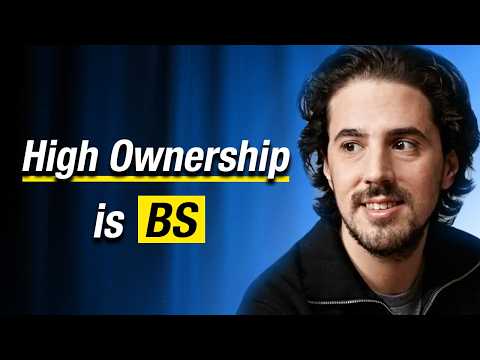
David Tisch: Why No Manager Wants to Stay Small & Why Competing with Mega Platforms is a Losing Game
David Tisch argues early-stage venture is won by being there first and saying yes to great founders, not by competing for ownership against mega platforms; outcome size and lower dilution make his low-ownership model work.
Watch on YouTube ↗Charlie's summary
- ▶ 3:05
Macro matters less than whether your company is the great one; every frothy market still holds great companies
David says each market moment, 2021 included, is a standalone condition, and that for an early-stage investor “the macro is less impactful than the micro.” Frothy periods hold bad companies that blow up or die quietly, but also a handful of great ones built for the long term. His advice is to ask whether your company is the important one, not to read the cycle.
- ▶ 6:40
Big seed rounds don't break the math because outcomes are bigger and later rounds dilute less
David says you can complain about $10-20 million seeds or say yes or no, since you can't change a free market. Two things protect the economics. A $10 billion outcome is now a normal target rather than far-fetched. And later-stage rounds on hot companies cost founders and early holders 3 to 8% dilution instead of 12 to 20%. His fix for price is a balanced portfolio, not deal-by-deal ownership.
- ▶ 14:22
Concentrated funds don't really win 90% of their deals; adverse selection hurts them
Harry admits he was wrong to miss how much outcome sizes would expand. David adds the second flaw he sees in concentrated models: managers claim a 90% win rate, but he thinks it is nearer 20%. To fund 30 companies at 10% ownership, he says, you may offer terms to 120 to 150, so the 30 you own may not be the 30 you most wanted. His wider portfolio gets into more of the companies he is excited about.
- ▶ 18:31
Tranched rounds are a yes-or-no decision, not an emotional one, but David has a long memory
Asked whether he would accept a founder's tranched round, David says he dislikes them but the emotional reaction and the business decision are decoupled. If he wants the lower tranche, it is his job to persuade the founder, and if he can't, “it's a me problem.” He also remembers which investors pushed him into a different product than theirs, and says people playing a short game in hot markets will show up later.
Give your email to unlock the rest of the key points — for every episode.
Do more with Charlie
Free — sign in with your email, no password.