
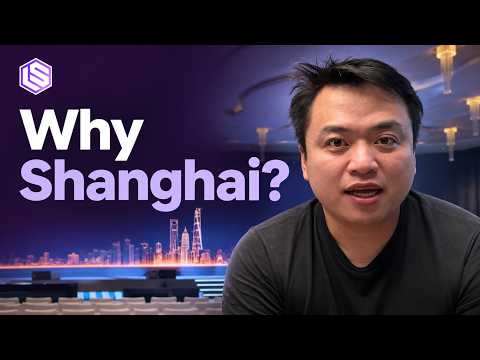
Behind Latent Space, ft AIEi Shanghai preview — with swyx and Galen Gao
Swyx explains how learning in public and the AI Engineer title built Latent Space and AIE, why coding agents threaten mid-tier SaaS, and what he finds exciting and worrying in AI.
Watch on YouTube ↗Charlie's summary
- ▶ 8:15
Learning in public lets you choose your own boss, because tech knowledge is positive-sum while finance knowledge is zero-sum
Swyx says that in finance, a truth loses value once you share it, while in tech sharing raises value for everyone. Bored at a job with a bad boss, he put his energy into writing and speaking. He started the blog to learn AI after Stable Diffusion, and Emad Mostaque read his analysis. He says hard work alone doesn't entitle you to win: you also need judgment about substantial work.
- ▶ 12:52
The AI Engineer title worked because it gave people a prestigious-enough identity and a path that pays
At a hackathon, a non-technical woman asked what she could do in AI. Swyx realized engineers can control 100 AIs while non-engineers can only prompt better. Harness building needs good software engineering, not advanced math. Drawing on the idea from James Clear, he says you connect with people through identity, not activities: “you give them a job title that pays money,” and they become loyal.
- ▶ 19:32
Focus on engineers who do the work, not talking heads who never touch code
Swyx says many AI conferences feature senior people with big titles who don't code and all say the same thing, such as AGI in two years and no jobs. “Conveniently, whatever is next looks like their job.” AIE follows GDC, KubeCon and PyCon: engineer-to-engineer events where the people who choose the tech stack share war stories. Whoever wakes up at 4 a.m. to fix the failure is the engineer.
- ▶ 21:36
Every industry needs one flagship event, and AIE franchises its brand to local partners
Swyx compares model labs to AAA game studios that share their methods only at GDC. Labs' own events are small and customer-focused. At a shared venue, Chinese labs and US companies that can't officially take meetings can still run into each other. For other countries he uses a JSConf-style partnership model with three rules: brand protection with revenue share, publishing everything, and a code of conduct. He notes that China needed a local owner because he can't set up an entity there.
Give your email to unlock the rest of the key points — for every episode.
Do more with Charlie
Free — sign in with your email, no password.