
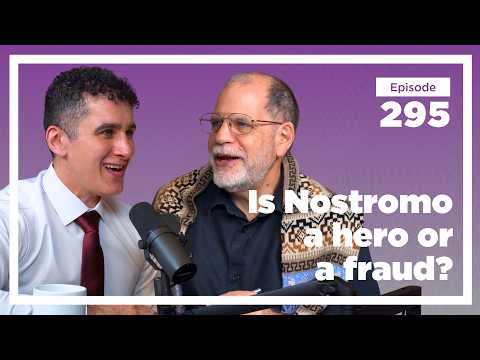
Richard Hanania on Conrad’s Nostromo, Latin American Crime, and Populism
Tyler Cowen and Richard Hanania read Conrad's Nostromo as a study of Latin American dysfunction, then apply its lessons to crime, media, populism and the right, disagreeing about whether comparison or tragedy is the right lens.
Watch on YouTube ↗Charlie's summary
- ▶ 3:20
Nostromo shows that poor countries need Western capital, yet foreign money is politically the easiest thing to demagogue against.
Richard reads the novel as pro-business: the Gould mine brings real development, and miners march on the city out of loyalty to Gould. Yet the discourse around it is hostile, and the mine's backers are always fending off threats. Tyler reads Conrad as seeing socialism as a symptom of a trapped society, not its cause.
- ▶ 21:08
Comparativist versus tragedian: Richard judges Gould against the alternative, while Tyler says Conrad is Shakespearean and does not compare.
Richard says Gould's flaws “pale in comparison” to generals like Montero and Sotillo, so the Western side is clearly better. Tyler replies that Conrad wants to show reality as tragic, as Shakespeare does, and is not debating which ruler is better. Tyler thinks Richard's political-science habit of comparing explains their different readings. Richard agrees the human factor comes first.
- ▶ 17:26
Conrad's Charles Gould treats liberty and democracy as words with “a flavor of folly and murder.”
Tyler quotes Gould and takes it as Conrad's own view: a liberal by temperament who saw these principles turn into folly abroad. He reads the newspaper called Porvenir as mockery of classical liberals living in a dream world. Richard accepts the quote but argues Avellanos is the novel's conscience and that Conrad is not that cynical about liberalism.
- ▶ 29:19
Conrad sees travel and geography as the deepest form of political knowledge.
Tyler argues that in Conrad's books, from Heart of Darkness to Lord Jim, someone goes somewhere, and the being there reveals what places are like. Richard adds that Conrad's nationalism is organic and finely grained, never turning into a project of conquest. Tyler applies the point to himself: he has never visited Congo and feels he would understand it better if he had.
Give your email to unlock the rest of the key points — for every episode.
Do more with Charlie
Free — sign in with your email, no password.