
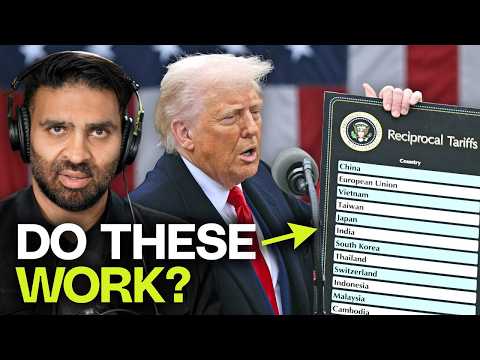
Why Trump’s tariffs didn’t bring manufacturing back to America | Decoder
Willy Shih argues that supply chains follow economics, so tariffs mostly trigger circumvention and uncertainty rather than reshoring, and that real US manufacturing needs high productivity, differentiation and strategic planning.
Watch on YouTube ↗Charlie's summary
- ▶ 5:33
Markets route around tariffs: first circumvention, then tariff engineering, then relocated assembly
Willy says supply chains are driven by economics, so trade barriers prompt workarounds. Before Liberation Day, imports surged: Ireland hit a record in Q1 2025 and then slowed. New direct shipping routes from China to Mexico move parts for assembly, so TVs enter under USMCA. “The market will find a way around that.”
- ▶ 10:13
Tariffs only raise prices once every loophole is closed, and the old cheap-goods model left displaced workers behind
Willy says that when you tariff everything, goods get costlier at home. Steel tariffs, for example, made it easier to import construction equipment, which is more than half steel by cost. From 2000 to about 2012 low inflation partly reflected cheap Chinese goods, but the US never planned to retrain displaced workers. Exchange rates, which moved in the 1980s, also failed to rebalance trade.
- ▶ 17:48
US manufacturing returns only where labor productivity is high or products are uniquely differentiated
Willy starts from the premise that the US is a high-cost country. Jobs that come back use heavy automation and high skill, or involve technology no one else has. His example: only three companies worldwide can cast the superalloys for jet engine hot sections, and two are American. He says wishing for the 1970s, when manufacturing was the route to the middle class, ignores how the industry has changed.
- ▶ 21:19
The iPhone is global because it needs both the most advanced chips and mass manual assembly labor
Willy says iPhones use TSMC's advanced chips, mostly made in Taiwan, with tools from ASML, Lam Research and Applied Materials. They also need manual assembly, which means mobilizing 100,000 to 200,000 workers. China's walled-city Danwei-style production sites make that possible. India is trying and has had some success, but it was hard. That combination explains why the product cannot simply be moved.
Give your email to unlock the rest of the key points — for every episode.
Do more with Charlie
Free — sign in with your email, no password.