
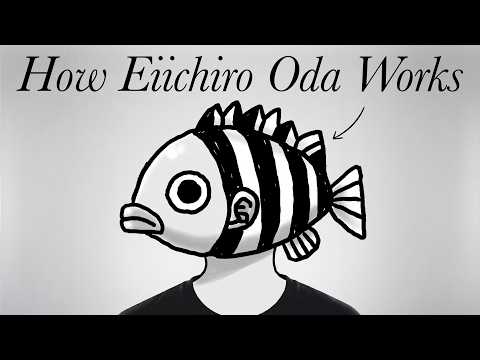
How Eiichiro Oda Works
Eiichiro Oda built One Piece by making the manga he wanted to read, doing nearly all the work himself, and accepting an extreme, compulsive work life that trades efficiency for depth.
Watch on YouTube ↗Charlie's summary
- ▶ 0:59
Differentiation is the whole game: Oda drew the manga he wanted to read, not what the market wanted
Oda says he set out to draw what he wanted to read as a kid, because the market was saturated with heroes who fight demons. Founders host Dave ties this to Peter Thiel's Zero to One: happy companies are different, and failed ones fail to escape competition. Oda later argues artists should create trends and make something they find interesting popular, not follow demand.
- ▶ 2:02
Human desires are more universal than local, so write for one reader: your 15-year-old self
Oda says he can't create with the whole world in mind. He assumes that if Japanese children enjoy it, everyone will. He asks whether the 15-year-old Oda would find it awesome. Dave links this to Pixar, Steve Jobs and David Ogilvy: make what you love and trust that it travels. Dave reads it as a sign that what works in one country usually works in others.
- ▶ 4:34
Quality is inversely proportional to the number of people involved, so Oda refuses to delegate
Oda says he tries to have “the least number of people possible touching the work” because too many hands leave him dissatisfied. Dave pairs this with a line from the Steve Jobs book Insanely Simple and with Tobi Lütke's view that the best team size is one, since a single author can hit notes a team can't. Oda draws every moving element himself, including smoke, clouds and waves, because handing them off creates subtle inconsistencies. He insisted on approving the Netflix show and says he acted as a guard dog.
- ▶ 6:04
Oda thinks new ideas come only at the limit, so he thinks when tired and sleeps three hours
Oda's real secret is to think up plots when he's tired, because humans “can only come up with truly new ideas when they reach their limit.” Near deadlines he sleeps roughly 2am to 5am, and he kept that schedule for about 15 years. He says an extra hour of sleep is an hour lost from work. His weekly cycle runs Monday to Wednesday on story and storyboards, Thursday to Saturday on drawing, and Sunday on color work. He is exhausted after each manuscript.
Give your email to unlock the rest of the key points — for every episode.
Do more with Charlie
Free — sign in with your email, no password.