
Wall Street Soars, Midterms Shake Up AI Race, Prediction Markets Win | Diet TBPN
The hosts read the midterm results through markets: prediction markets proved accurate, data center moratoria reshuffle the AI trade toward hyperscalers and away from neoclouds, and Elliott warns of a reversal from FOMO to FOGO.
Watch on YouTube ↗Charlie's summary
- ▶ 3:36
Prediction markets did what they were supposed to do in the midterms, and are most trustworthy when they show a definitive leader
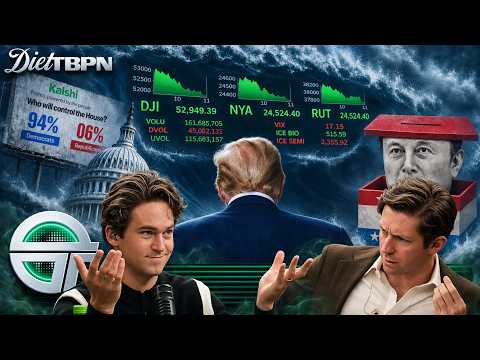
The hosts say markets called almost everything right. Kalshi was at 95% accuracy when polls opened and 81% three months out, against 77% for the VoteHub average. They read this as meaning you can put more weight on markets with a clear leader, since many races were closer to 60/40. The Texas governor flip was the surprise. They note that a late flip is the usual trouble with such markets.
- ▶ 7:11
Data center moratoria went 43 to 1, and the AI trade is reshuffling rather than simply falling
The hosts say the 43-to-1 result, with North Dakota the outlier, is a bigger deal than the Texas race. They argue AI stocks and data center builders had already sold off in anticipation. Ben Thompson's first point is that the AI trade got it right. Credit markets are tight and the pain may be partly priced in. Spot GPU prices are rising even as the data center buildout looks constrained. Everyone should re-check their projects' permitting status.
- ▶ 8:43
California's Prop 40 failing may be the most underrated outcome for the tech industry
One host is surprised how little attention the failure of Prop 40 gets. As written, it would have upended how technology companies are built in California, where many founders are paper billionaires. He notes that it would have been litigated and that no one would have collected a $50 million check on November 4th. Californians voted against it resoundingly. The hosts also cite flaws in the drafting and say groups that normally back such taxes had reason to oppose it.
- ▶ 10:14
A moratorium on new data centers helps hyperscalers and already-permitted sites, and hurts neoclouds that sold their compute on long contracts
Thompson's takes, as the hosts relay them: neoclouds were already struggling to finance builds, and existing permitted facilities become scarcer assets. A neocloud that sold all its compute on long contracts misses the spot market, which is in contango, and cannot add capacity to sell into it. Hyperscalers like Amazon gain share, and investors may welcome curbed spending. The hosts say political opposition gives them an excuse to moderate spending. Nvidia is a short-term loser, but power-limited sites create an incentive to upgrade to the most efficient chips.
Give your email to unlock the rest of the key points — for every episode.
Do more with Charlie
Free — sign in with your email, no password.