
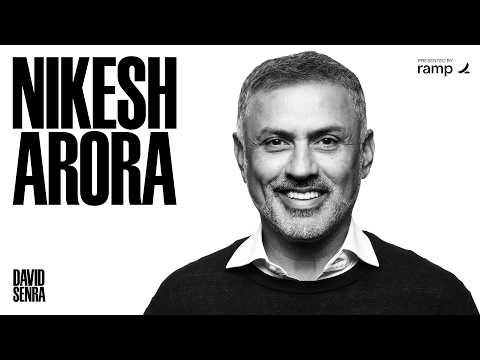
How to Win Deals & Grow a $250B Business | Nikesh Arora, Palo Alto Networks
Nikesh Arora explains how he built Palo Alto Networks through platform expansion and disciplined acquisitions, how he thinks AI reshapes cybersecurity and company structure, and why he stays calm and keeps parenting pressure low.
Watch on YouTube ↗Charlie's summary
- ▶ 9:09
Enterprise scale comes from selling many products to the same customer, because customer acquisition is the biggest cost
Nikesh studied enterprise P&Ls: R&D runs 15 to 18% and admin 6 to 10%, so the gap to a 40% operating margin is sales, marketing and support. A one-product firewall company has to knock on 20 doors and gets turned down by most. Palo Alto needed adjacent products customers would trust. Nikesh says nobody wants the second-best cybersecurity product, so each one has to be best in class.
- ▶ 11:40
Good technology products take 4 to 7 years to build, so he buys instead of builds, treating M&A like a portfolio
Nikesh says Uber, YouTube, Facebook and Google Search all took 4 to 7 years to become useful. At Google, he opposed buying Netflix because YouTube could build the capability, but he also says internal builds start a year and a half behind teams of 50 to 75 people. He studied why acquisitions fail, controlled five variables, and accepted two risks. One is the wrong idea, like Aprimo, which he cut quickly. He compares this to pharma dropping failed drugs.
- ▶ 14:44
Put the acquired founder in charge, and buy number one, not number two
Nikesh thinks acquisitions mostly fail on execution. The executive who has been struggling in that area shouldn't be handed the prized asset. The founder who built product-market fit should lead it. He also avoids buying number two and 'spinning and shining' it, since number one and two take a disproportionate share of profits. Number one still exists, and corporate 'I'm from the mothership' help slows the acquisition.
- ▶ 19:17
Don't sign the deal until the founder signs a joint product roadmap
Nikesh refuses to use bankers and agrees terms directly with the founder. Lawyers handle paperwork while the founder and his product team spend 30 days designing a joint roadmap before signing. With a big check pending, founders become far more amenable: 'night and day.' Palo Alto has walked away twice, once over doubts about alignment and founder behavior, once because the substance was weaker than diligence suggested. Founders are reinvested for 3 to 4 years for continuity.
Give your email to unlock the rest of the key points — for every episode.
Do more with Charlie
Free — sign in with your email, no password.