
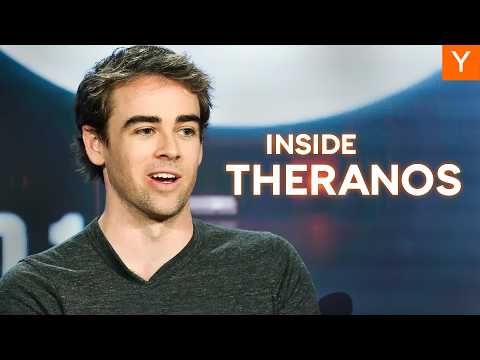
Inside Theranos with ex-Employee Tyler Shultz
Tyler Shultz argues that Theronos ran on charisma, borrowed credibility, secrecy and fear, and that founders, employees and investors can resist such fraud with processes, early use of ethical channels and good legal help.
Watch on YouTube ↗Charlie's summary
- ▶ 4:06
Extreme internal secrecy let Theronos hide that nothing worked, and a first job gave Tyler no reference point to see it
Tyler interned among people who had worked there for years and never seen the product. Doors were locked, labs were siloed, and NDAs forbade talking about work, all justified as protecting trade secrets. Tyler says that with no experience outside a university, you “don't really know that that's not normal.” A colleague's parting warning to go “learn how to do real science” was one he brushed off.
- ▶ 7:45
On launch day Theronos had zero validated tests on its own device and was quietly using other companies' machines
Tyler's first day was the day after the Walgreens launch. The validation manager quit in tears, and his manager told the team that no tests were validated on the Theronos platform. Patients got a needle in the arm, not a finger prick, and samples went to other labs or to third-party Siemens equipment. The first validated test was HBA1C, which he calls notoriously easy. He still got caught up in the celebration.
- ▶ 17:01
Culture does not happen by accident: Theronos built a culture of fear over a decade, and everyone knew
Tyler says anyone who questioned Elizabeth was fired, sometimes sued, and the lawsuits were announced company-wide. The subtext was “We will sue you, too.” Employees stopped speaking up, and he says everyone working with the device knew it could not test 300 things from one drop. One coworker bought a house in another state and walked out on a Friday, too afraid to give notice. Tyler tells founders that culture is built deliberately and slowly.
- ▶ 23:40
The red flags were concrete: seven validated tests, a hidden lab, and a cheated state audit
By the time Tyler left, seven tests were validated, not 300. The device could run one test at a time and needed a pipetting robot. When regulators came, the door to the room housing the proprietary device was locked and inspectors saw only the third-party-equipment lab. In the New York audit, only third-party results were reported, even where they differed from Theronos results by over 300%. Tyler says management knew Theronos results would be wrong, yet was fine giving them to patients.
Give your email to unlock the rest of the key points — for every episode.
Do more with Charlie
Free — sign in with your email, no password.