
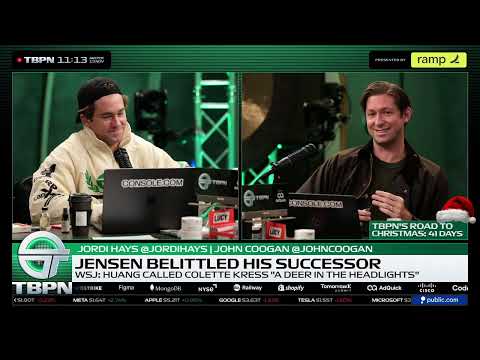
TSMC Hacked, Vibes Down Outlook Down, 41 Days Till Christmas, Nvidia v2
With Jensen Huang out as Nvidia CEO, the episode weighs whether Nvidia can survive without its founder, how Washington politics and chip exports shaped the scandal, and what wealthy investors do in crises.
Watch on YouTube ↗Charlie's summary
- ▶ 13:19
A founder-CEO's real value is breaking committees and making the call, which takes little time but speeds up the whole organization
The hosts push back on the idea that Jensen was only a showman. They argue a founder doesn't need to master every technical detail: with 30 years of context, he can make a gut call and be right about 80% of the time. He is right close to 100% of the time about speed, because he ends the debate with “disagree and commit.” That can take a 15-minute meeting, and it is the hardest thing to replace.
- ▶ 18:25
Nvidia's moat was both Jensen's engineering and his deal-making, and losing both is the real risk
The host argues that Jensen's deal-making was a real part of Nvidia's moat, and that it was a role Steve Jobs never played at Apple. He points to DHH's claim that culture takes about 10 years to rot once a non-engineer takes over. The host thinks that a successor who is strong in only one area could push decisions to committee. The counterview is that Nvidia could follow Apple's Tim Cook path and keep growing under a manager.
- ▶ 40:24
Tae's succession plan: pick a CEO who knows their limits, then lock down roughly ten key executives
Tae Kim says Nvidia can stay successful if the board retains its deep bench. He names Colette Kress and Jonah Alben, who leads GPU engineering, among about 10 people it must keep. His CEO candidates are Arm's Rene Haas, as the public-facing business manager, and CUDA creator Ian Buck, who runs data center and shares Jensen's sense of where technology is heading. Let the engineers run technology autonomously. Tae says the next two to three years of products are “baked in the cake,” and the real question is deal-making strategy three to five years out.
- ▶ 34:43
Jensen's bad behavior was his management style, not infidelity, but the direct-report affair was what made his exit unavoidable
Tae Kim did over 100 interviews for his book. Nobody raised infidelity as a concern. The bad behavior he heard about was berating executives in meetings, which he says is Jensen's standard operating procedure. Tae says a second report involving a direct report, backed by five sources, was game over because it clearly breaks Nvidia's code of conduct on conflicts of interest and power over subordinates. He also rejects the claim that Jensen was just a front man, citing dozens of firsthand accounts of him micromanaging executives with short emails.
Give your email to unlock the rest of the key points — for every episode.
Do more with Charlie
Free — sign in with your email, no password.