
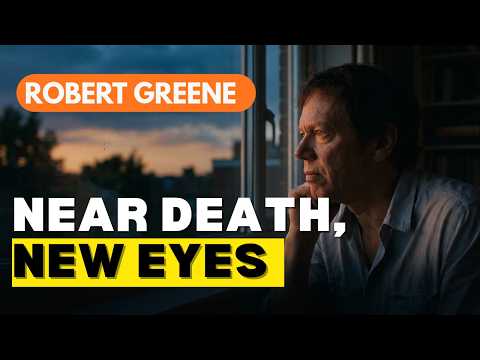
Robert Greene: After a Stroke, He Wrote a Book by Hand for 7 Years #podcast #selfimprovement
Robert Greene argues that language, labels and smartphones shrink our experience, and that the sublime, a bodily sense of vastness, can wake us up and give life meaning without a near-death experience.
Watch on YouTube ↗Charlie's summary
- ▶ 1:34
The stroke forced the book to shrink from grand travels to finding the sublime in ivy, sky and conversation
Before the stroke, Robert planned to visit mountains, deserts, Chilean observatories and animal encounters. Afterward he could barely walk 10 steps from his front door, so he found the sublime in his office, the night sky, the ivy on his wall and talks with people. His point for readers is that they don't need a near-death experience to see the world differently.
- ▶ 3:36
Your brain builds a comfortable, familiar world, and near-death strips that filter away
Robert says the brain turns chaotic input into the cushiony world you see and into a sense of yourself as separate from your surroundings. When the brain starts to break down, you see the world without those filters, directly and before words. The sublime, he says, is “a sensation in your body,” not an abstract concept. His book uses stories and exercises to get readers closer to it.
- ▶ 6:40
Your labels for yourself (shy, ambitious, extroverted) mostly reflect what others told you; you are a mystery to yourself
Robert says language began as a small survival skill and now dominates life. Words like shy or extroverted largely echo how other people see you, and you internalize those judgments. You are really a living organism with a particular brain and physiology. Accepting that you don't know who you are opens exploration of what he calls your second self, one based on sensations rather than categories.
- ▶ 10:19
The sublime is a practical antidote to horizons shrinking to the size of a smartphone
Robert argues that humans hunger for meaning and connection to something larger, especially since we know we will die. Algorithms and marketing now program our experience, and religion no longer anchors people, which he links to a mental health crisis. His example is Miguel in Argentina: after months of talk therapy left him focused on himself, his therapist had him train to climb Mount Aconcagua. Opening his eyes to the sky and weather transformed him.
Give your email to unlock the rest of the key points — for every episode.
Do more with Charlie
Free — sign in with your email, no password.